How to Build a Personalized First Aid Kit
A well-stocked first aid kit can help manage minor injuries and provide useful supplies while waiting for professional care. The best kit is tailored to the people who will use it, the activities they do, and the places they go. A household kit, for example, may need different supplies than a kit kept in a vehicle or taken on a hiking trip.
A first aid kit is not a substitute for medical care. For serious injuries or emergencies, call 911 and follow the dispatcher’s instructions.
Start With the People Who Will Use It
Consider everyone who may need the kit, including children, older adults, and people with disabilities or ongoing health conditions. Account for known allergies, mobility needs, and any supplies someone may need to manage a medical condition.
Personalized additions might include:
- Emergency contact information and relevant medical details
- Glucose supplies for someone who has diabetes, if recommended for their care plan
- An extra pair of glasses or contact lens supplies
- Medical alert information or a copy of an emergency care plan
- Child-sized bandages or other age-appropriate supplies
- Any prescribed emergency medication, stored and maintained according to its instructions
Keep prescription medicines in their original, labeled containers when possible. Follow the medication label and a health professional’s guidance, and check expiration dates regularly. Never include a medicine someone is allergic to or cannot safely take.
Include Useful First Aid Basics
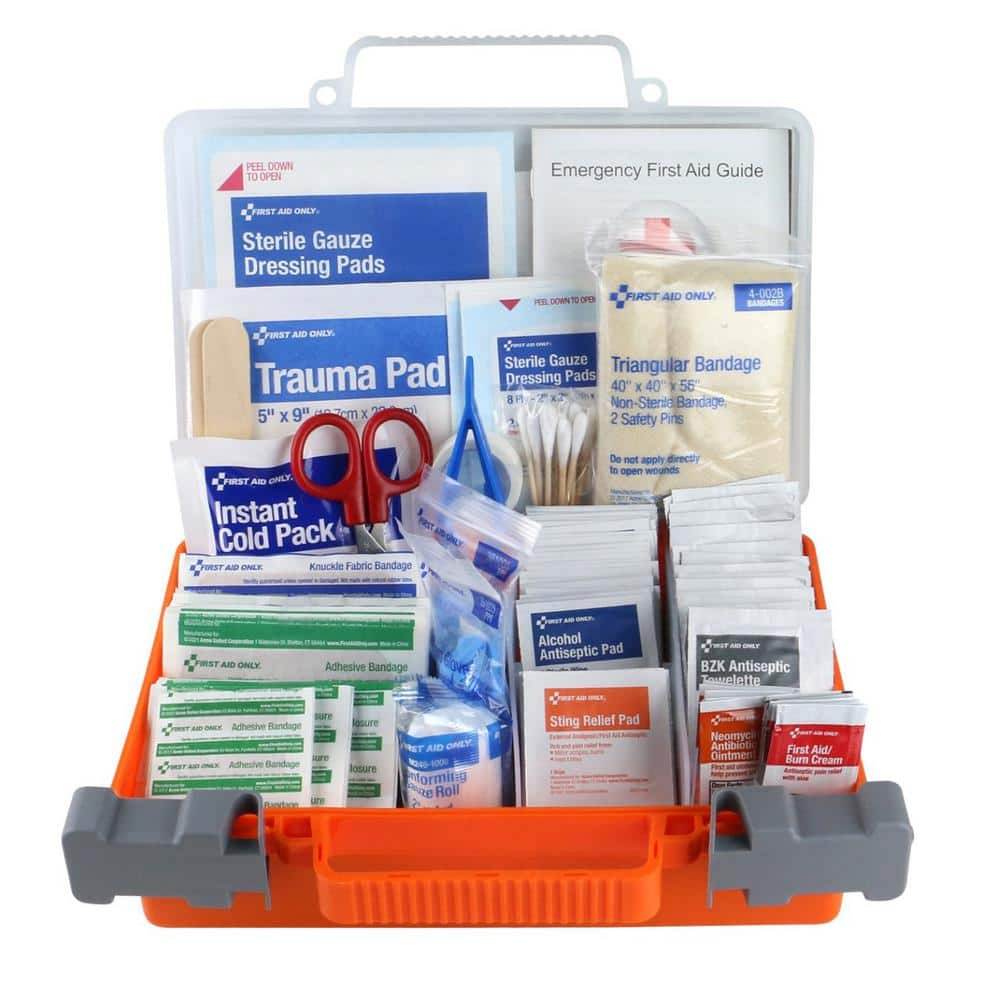
Most home kits can begin with a core set of supplies for cleaning and covering minor wounds. The American Red Cross and other reputable organizations offer first aid kit checklists; use one as a starting point, then adjust it for your household.
- Adhesive bandages in assorted sizes
- Sterile gauze pads and rolled gauze
- Adhesive medical tape
- Antiseptic wipes
- Disposable gloves
- Small scissors and tweezers
- Instant cold pack
- Digital thermometer
- Triangular bandage
- First aid instructions or a compact first aid guide
Choose supplies that household members know how to use. A kit packed with unfamiliar equipment can be difficult to rely on during a stressful moment.
Make Separate Kits for Different Places
Keep a main kit at home and consider smaller kits for the car, workplace, school, or outdoor activities. A portable kit should be compact, easy to find, and suitable for the conditions where it will be kept. For instance, supplies stored in a vehicle may be exposed to heat, so check product storage directions and replace items as needed.
For hiking, camping, or remote travel, consider adding a flashlight, emergency blanket, water-purification supplies, and a way to contact emergency services. Learn how to use any specialized equipment before bringing it along.
Plan for Texas Weather and Flooding
In Texas, severe storms, extreme heat, and flooding can disrupt access to stores or medical care. A home emergency kit can include first aid supplies alongside drinking water, a flashlight, batteries, a phone charger or power bank, and copies of important contact information.
If flooding is possible, store the first aid kit in a waterproof container and keep it somewhere easy to reach. Do not enter floodwater to retrieve supplies. Floodwater can contain sewage, chemicals, debris, and hidden hazards. Follow local emergency instructions and leave flooded areas when authorities advise evacuation.
Store and Maintain the Kit
Keep the kit in a clearly labeled, dry location that adults can reach quickly. Make sure everyone in the household knows where it is, while keeping medicines and sharp tools out of children’s reach.
Review the kit every six months and after using it. Replace expired, damaged, or depleted items, and check batteries and medication storage requirements. Update emergency contacts and personal information when circumstances change.
A Kit That Fits Your Needs
A personalized first aid kit is most useful when it reflects the people, activities, and risks it is meant to support. Start with reliable basic supplies, add relevant personal items, and keep everything accessible and up to date. Pair the kit with first aid training so household members are better prepared to respond safely.
7 Tips for Building a Personalized First Aid Kit
- Tailor supplies to your health needs and medications.
- Include allergy treatments you may need, such as an epinephrine auto-injector.
- Pack child-sized supplies if caring for kids.
- Add essentials for contact lenses, glasses, or hearing aids.
- Choose supplies suited to your activities and destination.
- Label prescription items and check expiration dates regularly.
- Store the kit where everyone can find it quickly.
Tailor supplies to your health needs and medications.
Customize your first aid kit to reflect your health needs and the medications you use. Include essential supplies for managing relevant conditions, along with emergency contact information and any care instructions you may need. Keep medications in their original containers when possible, follow storage directions, and check expiration dates regularly. Consult your health care provider or pharmacist if you’re unsure what to include or how to store it safely.
Include allergy treatments you may need, such as an epinephrine auto-injector.
Include allergy treatments that are appropriate for your needs, such as a prescribed epinephrine auto-injector. Keep it easy to reach, check its expiration date and storage instructions regularly, and make sure anyone who may help knows how to use it. If epinephrine is used for a severe allergic reaction, call 911 right away, even if symptoms improve.
Pack child-sized supplies if caring for kids.
If you’re caring for children, include child-sized supplies such as small adhesive bandages, appropriately sized gloves, and a digital thermometer that’s easy to use. Keep any medications suitable for children in their original packaging, and follow the label or a health professional’s instructions for age- and weight-based use. Avoid including items you’re unsure how to use, and store the kit where adults can reach it but young children cannot.
Add essentials for contact lenses, glasses, or hearing aids.
Add supplies for contact lenses, glasses, or hearing aids so vision and hearing needs don’t become an extra challenge during an emergency. Consider including a spare pair of glasses, a contact lens case and travel-size solution, and extra hearing-aid batteries or a charger. Store items as directed by the manufacturer, and check them regularly to make sure they’re clean, working, and ready to use.
Choose supplies suited to your activities and destination.
Choose first aid supplies that match your activities and destination. A kit for a day hike might include blister pads, tweezers, and an emergency blanket, while a beach kit may need extra bandages and waterproof storage. For road trips, keep supplies secured in your vehicle and check that they can tolerate temperature changes. Think about how far you’ll be from medical help, the conditions you may encounter, and what your group members may need.
Label prescription items and check expiration dates regularly.
Label prescription items clearly and keep them in their original containers so their names, instructions, and expiration dates are easy to verify. Check the kit regularly—at least every six months—and replace expired or damaged items. Store medications according to their labels, and ask a pharmacist or health care professional if you’re unsure how to store or replace them.
Store the kit where everyone can find it quickly.
Store your personalized first aid kit in a clearly marked, easy-to-reach place that everyone in your household knows about. Tell family members, caregivers, or coworkers where it is, and keep it accessible in an emergency without placing it where young children can reach medicines or sharp tools. If you keep kits in several locations, such as your home and car, make sure everyone knows where each one is.