Large First Aid Kit: What to Include and How to Choose One
A large first aid kit can help households, workplaces, schools, community groups, and travel teams handle common injuries and provide basic care while professional help is on the way. The right kit is more than a box full of supplies: it should be organized, easy to reach, suited to the people and activities it serves, and checked regularly.
Who Needs a Large First Aid Kit?
A larger kit may be useful wherever several people gather or where help could take time to arrive. Consider one for a large household, office, workshop, sports team, event venue, community center, or emergency shelter. A large kit can also be useful for extended trips, but it should be stored securely and kept within the temperature range recommended by its manufacturer.
Kit needs vary. A workplace with cutting tools may need more wound-care supplies, while a sports group may need extra cold packs and elastic bandages. A kit for children should include appropriately sized supplies and account for children’s specific needs.
What Should a Large First Aid Kit Include?
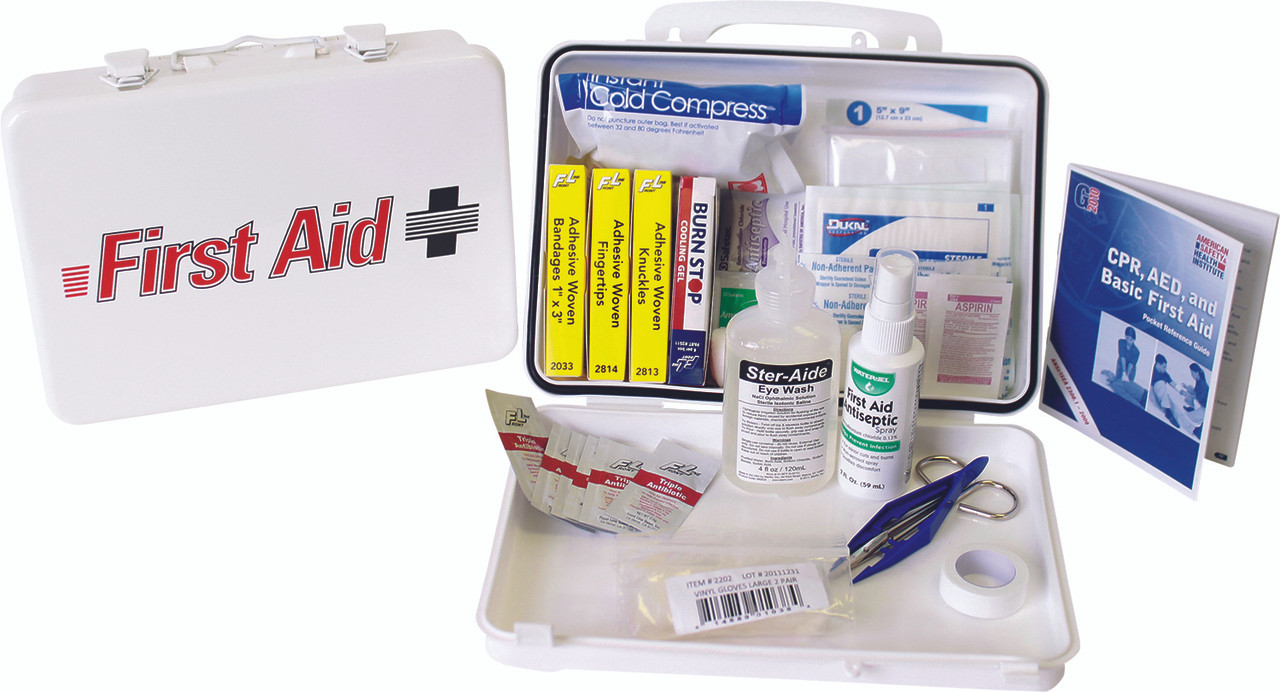
Check the kit’s contents against your likely risks, the number of people it may serve, and the instructions in any applicable workplace or organizational requirements. A well-stocked kit commonly includes:
- Protective items: Disposable gloves, hand sanitizer, and a CPR face shield or breathing barrier.
- Wound-care supplies: Adhesive bandages in several sizes, sterile gauze pads, rolled gauze, medical tape, and nonstick dressings.
- Cleaning supplies: Antiseptic wipes or another suitable wound-cleaning option, plus clean water or sterile saline when appropriate.
- Support and comfort items: Elastic bandages, triangular bandages, instant cold packs, and a blanket.
- Tools: Blunt-tip scissors, tweezers, a digital thermometer, and a small flashlight with spare batteries.
- Emergency information: A first aid guide, emergency contact numbers, and a basic incident-record form.
Some kits include over-the-counter medicines. These should be selected and managed carefully: people may have allergies, medical conditions, or medication interactions. Keep personal prescription medicines separate, follow their storage directions, and do not give medication unless the person’s circumstances and the product’s instructions make it appropriate.
How to Choose the Right Kit
- Estimate the number of users. A kit intended for a group needs more supplies than one designed for a single person or small household.
- Match contents to likely injuries. Think about the setting, tools, activities, weather, and distance from medical care.
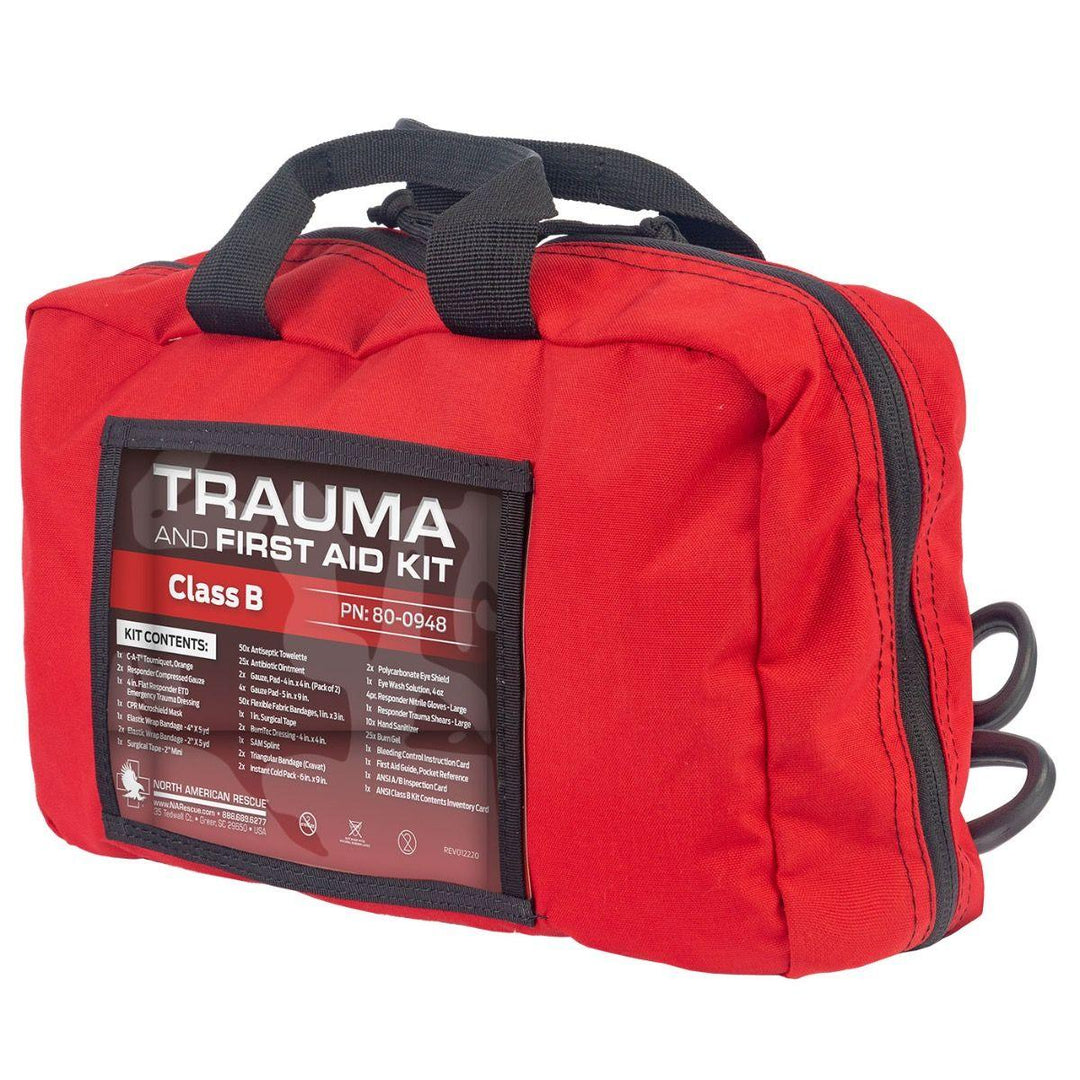
- Look for clear organization. Labeled compartments and a contents list make supplies easier to find under pressure.
- Choose a durable case. A sturdy, clearly marked container helps protect supplies and makes the kit easier to identify. A waterproof case may be useful in damp environments, but it should still be checked for moisture inside.
- Consider accessibility. Store the kit where people can reach it quickly, while keeping it away from young children when necessary.
- Check instructions and quality. Review the manufacturer’s contents list, restocking options, expiration dates, and any relevant workplace or industry requirements.
Organization and Storage
Place the kit in a known, accessible location and tell household members or staff where it is. Avoid storing it near heat, direct sunlight, or moisture, which can damage some supplies. In a vehicle, temperature extremes can affect medications and other heat-sensitive items, so a vehicle kit should be checked more often and stored according to product directions.
Keep supplies in their original packaging when possible. This preserves instructions and expiration information and helps maintain cleanliness. Do not place loose medicines or unmarked items in the kit.
Inspect and Restock Regularly
A large kit is only useful if its contents are present and in good condition. Set a recurring inspection schedule, and check the kit after every use. Replace supplies that are used, damaged, wet, or expired. Make sure tools work, batteries are charged or replaced, and the contents list matches what is actually inside.
It can help to assign a responsible person to record inspections and restocking. For a workplace or organization, follow any applicable safety procedures and requirements.
Know the Limits of First Aid
A first aid kit supports basic care; it does not replace professional medical treatment. Call 911 for life-threatening emergencies, such as severe bleeding, difficulty breathing, signs of stroke, or serious burns. Follow the dispatcher’s instructions. Provide only care you are trained to give, and use protective equipment when possible.
For severe bleeding, serious injuries, or a person who is unresponsive, seek emergency help immediately. First aid or CPR training can help people respond more confidently and use kit supplies safely. Consider taking a course from a recognized provider and refreshing training as recommended.
Be Ready Before an Emergency
The best large first aid kit is one that fits its users and setting, is easy to find, and stays stocked. Pair it with a simple emergency plan, clear contact information, and current first aid training so people know what to do when an injury occurs.
Top 6 Benefits of a Large First Aid Kit: Comprehensive Care for Every Situation
- Covers more people at once.
- Offers a wider range of supplies.
- Helps treat common injuries quickly.
- Useful for homes, workplaces, and events.
- Keeps supplies organized in one place.
- Supports emergency preparedness.
5 Drawbacks of Large First Aid Kits: Storage, Cost, and Maintenance Challenges
- Can be bulky and difficult to store.
- Often costs more than a basic kit.
- Supplies may expire before use.
- Can be confusing without clear organization.
- Still requires regular inspection and restocking.
Covers more people at once.
A large first aid kit can support several people at once, making it a practical choice for workplaces, schools, events, and large households. With more supplies on hand—such as bandages, gauze, gloves, and cold packs—responders can assist multiple people during an incident without quickly running out of essentials.
Offers a wider range of supplies.
A large first aid kit offers a wider range of supplies, making it easier to respond to different types of injuries and needs. With items such as assorted bandages, gauze, dressings, gloves, and cold packs, it can provide more options for basic care at home, work, or during group activities.
Helps treat common injuries quickly.
A large first aid kit helps people respond to common injuries quickly by keeping essential supplies—such as bandages, gauze, antiseptic wipes, and medical tape—in one convenient place. When supplies are organized and easy to access, minor cuts, scrapes, and other everyday injuries can be cared for promptly while you assess whether additional medical help is needed.
Useful for homes, workplaces, and events.
A large first aid kit is a practical choice for homes, workplaces, and events because it can serve many people and cover a wider range of common injuries. With supplies organized in one accessible place, families, coworkers, and event staff can respond quickly to minor cuts, scrapes, and other emergencies while seeking professional help when needed.
Keeps supplies organized in one place.
A large first aid kit keeps essential supplies organized in one place, making bandages, gauze, gloves, and other items easier to find when time matters. Clearly labeled compartments help prevent rummaging through drawers or searching multiple locations, so people can respond more quickly and check at a glance what needs to be restocked.
Supports emergency preparedness.
A large first aid kit supports emergency preparedness by keeping a broad range of essential supplies in one accessible place. When an injury or unexpected situation occurs, having items such as dressings, gloves, gauze, and basic tools ready can help people provide appropriate initial care while waiting for professional assistance. Regularly checking and restocking the kit also helps ensure it’s ready when needed.
Can be bulky and difficult to store.
A large first aid kit can be bulky and difficult to store, especially in small homes, crowded offices, or vehicles with limited space. If it doesn’t have a designated spot, it may end up tucked away in a hard-to-reach area—making supplies slower to access during an emergency. Before choosing one, consider where it will be kept and whether a compact, well-organized case would better suit your space.
Often costs more than a basic kit.
A large first aid kit often costs more than a basic kit because it contains more supplies, a bigger storage case, and sometimes specialized items. The higher upfront price may be worthwhile for workplaces, large households, or groups, but it can be unnecessary if you only need supplies for a few people. Compare the contents with your actual needs to avoid paying for items you’re unlikely to use.
Supplies may expire before use.
A large first aid kit may contain more supplies than you use regularly, so some items can expire before they’re needed. This is especially common with medications, ointments, and sterile products. Check expiration dates on a regular schedule, replace expired or damaged items, and choose a kit with quantities that fit the number of people and the risks in your setting.
Can be confusing without clear organization.
A large first aid kit can be confusing to use if its supplies aren’t clearly organized. In an emergency, searching through crowded compartments for the right bandage or tool can waste valuable time and add stress. Choose a kit with labeled sections, keep similar items together, and return supplies to their proper places after use.
Still requires regular inspection and restocking.
A large first aid kit needs regular inspection and restocking to remain useful. Supplies may be used, expire, become damaged, or lose effectiveness over time, and keeping track of a larger inventory can take extra time. Without routine checks, the kit may be missing an essential item when someone needs it.