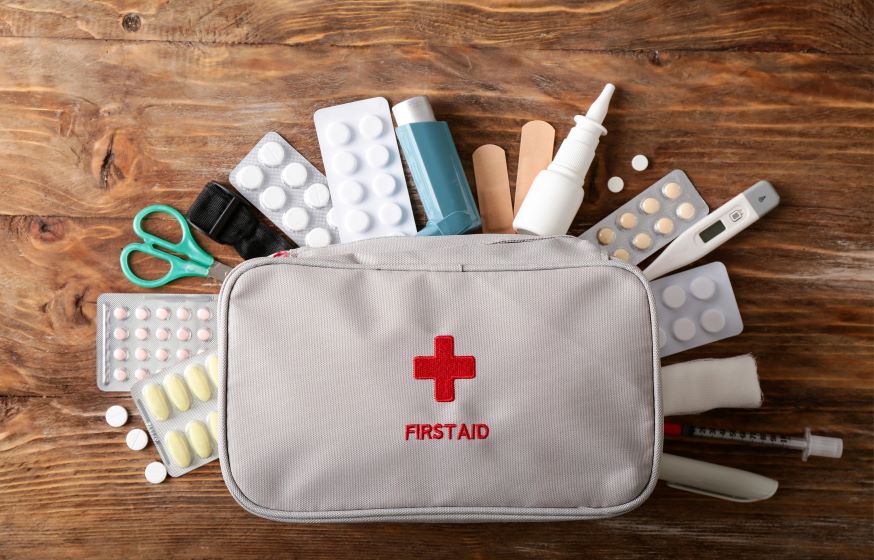
Basic First Aid Kit Items
A well-stocked first aid kit can help you handle minor injuries and provide basic care while you arrange professional help. Keep one at home and consider carrying smaller kits in your car, workplace, or travel bag. The right supplies depend on your household, activities, and medical needs.
Essential Supplies
- Adhesive bandages: Keep several sizes for small cuts, scrapes, and blisters.
- Sterile gauze pads and roller gauze: Use these to cover larger wounds or help control bleeding.
- Adhesive medical tape: Helps secure gauze and dressings.
- Antiseptic wipes: Useful for cleaning around minor wounds. Follow product directions, and avoid putting products into deep wounds unless a medical professional advises it.
- Antibiotic ointment: May be useful for some minor cuts and scrapes. Check the label and avoid it if anyone using the kit has an allergy to its ingredients.
- Disposable gloves: Nitrile gloves can help reduce contact with blood and other bodily fluids. Choose non-latex gloves if latex sensitivity is a concern.
- Scissors and tweezers: Use scissors to cut tape, gauze, or clothing around an injury. Tweezers can help remove small splinters.
- Instant cold pack: Can help cool a minor bump or sprain. Follow the package directions and place a barrier between the pack and skin.
- Digital thermometer: Helps check body temperature.
- First aid guide: Include clear instructions for common emergencies and basic care.
Helpful Additions
Depending on your needs, you may also include a CPR face shield, a triangular bandage, burn dressings, blister pads, an emergency blanket, and a small flashlight with spare batteries. A printed list of emergency contacts and relevant medical information can also be helpful, especially when traveling or caring for children.
Prescription medicines, pain relievers, and allergy medicines should be selected for the people who will use the kit. Store medicines in their original packaging, follow label directions, and check with a healthcare professional or pharmacist if you are unsure what is appropriate. Do not include medication that may be unsafe for a particular person, including because of age, allergies, health conditions, or interactions with other medicines.
Keep Your Kit Ready to Use
Store the kit in a clean, dry, easy-to-reach place, and make sure household members know where it is. Keep supplies in a sturdy, clearly labeled container. Check the kit every few months and after using it. Replace used, damaged, or expired items, and store supplies according to their labels.
A first aid kit is not a substitute for professional medical care. Call 911 for life-threatening emergencies, severe bleeding, difficulty breathing, signs of a serious allergic reaction, or other urgent symptoms. First aid training can help you use your supplies safely and confidently.
8 Essential Tips for Stocking a Basic First Aid Kit
- Include adhesive bandages in several sizes.
- Pack sterile gauze pads and medical tape.
- Add antiseptic wipes for cleaning minor cuts.
- Keep disposable gloves to reduce contamination.
- Include tweezers for removing small splinters.
- Add small scissors for cutting tape or gauze.
- Pack a digital thermometer.
- Check expiration dates and replace used items.
Include adhesive bandages in several sizes.
Include adhesive bandages in several sizes so your first aid kit is ready for a range of minor cuts, scrapes, and blisters. Smaller bandages work well for fingertips, while larger ones can cover broader areas. Check the package periodically and replace any bandages that are used, damaged, or no longer stick securely.
Pack sterile gauze pads and medical tape.
Pack sterile gauze pads and medical tape in your first aid kit to help cover cuts and scrapes, absorb blood, and hold a dressing in place. Choose gauze in a few sizes, and keep it sealed in its original packaging until needed to help maintain its sterility. For heavy bleeding or a serious wound, apply firm pressure and seek emergency medical care.
Add antiseptic wipes for cleaning minor cuts.
Add antiseptic wipes to your first aid kit so you can clean the skin around minor cuts and scrapes when soap and clean water aren’t readily available. Use each wipe as directed on the package, and avoid putting antiseptic products into deep wounds or using them near the eyes. For a wound that is deep, heavily bleeding, or showing signs of infection, seek medical care.
Keep disposable gloves to reduce contamination.
Keep disposable gloves in your first aid kit to reduce contact with blood and other bodily fluids when helping someone who is injured. Put on a fresh pair before providing care, and remove and discard them safely afterward. Nitrile gloves are a good option for people with latex sensitivities.
Include tweezers for removing small splinters.
Include a pair of tweezers in your first aid kit for removing small, superficial splinters. Clean the tweezers before use, then grasp the exposed end and gently pull in the direction the splinter entered. Don’t dig into the skin; seek medical advice if the splinter is deeply embedded, difficult to remove, or shows signs of infection.
Add small scissors for cutting tape or gauze.
Small scissors are a useful addition to a basic first aid kit because they make it easier to cut medical tape, gauze, or dressings to the right size. Choose a sturdy pair with rounded tips to help reduce the risk of accidental cuts, and keep them clean and stored securely in the kit.
Pack a digital thermometer.
Pack a digital thermometer in your first aid kit so you can check someone’s temperature when they feel ill. Choose a model that’s easy to read, keep it clean, and follow the manufacturer’s instructions for use and storage. Check the thermometer periodically to make sure it works and replace the batteries when needed.
Check expiration dates and replace used items.
Check your first aid kit regularly to make sure its contents are safe and ready to use. Replace anything you’ve used, and check expiration dates on medicines, ointments, and other supplies. Discard expired or damaged items according to label directions, then restock the kit so essential supplies are available when you need them.