First Responder Medical Kit: What to Include and How to Use It
A first responder medical kit is a collection of supplies used to provide initial care before a person can receive more advanced medical treatment. It may be carried by trained responders, workplace safety teams, event staff, or community emergency groups. The right kit depends on the setting, the responder’s training, and the risks they are likely to encounter.
A kit can help make essential supplies accessible during an emergency, but equipment alone does not make someone a medical professional. Training, scene safety, and following local protocols are just as important as the items inside.
Start With the Likely Risks
Before assembling a kit, consider where it will be used and what emergencies are most likely. A kit for a vehicle may need to withstand heat and vibration. A kit for a workplace should reflect its hazards, such as machinery, chemicals, or the possibility of severe bleeding. Outdoor teams may need supplies suited to weather, remote locations, and longer response times.
Also consider who may need care, how quickly emergency medical services can arrive, and whether the kit will be carried by one person or stored in a fixed location. A compact kit that is regularly checked and easy to reach may be more useful than a larger kit whose contents are unfamiliar or expired.
Common Supplies
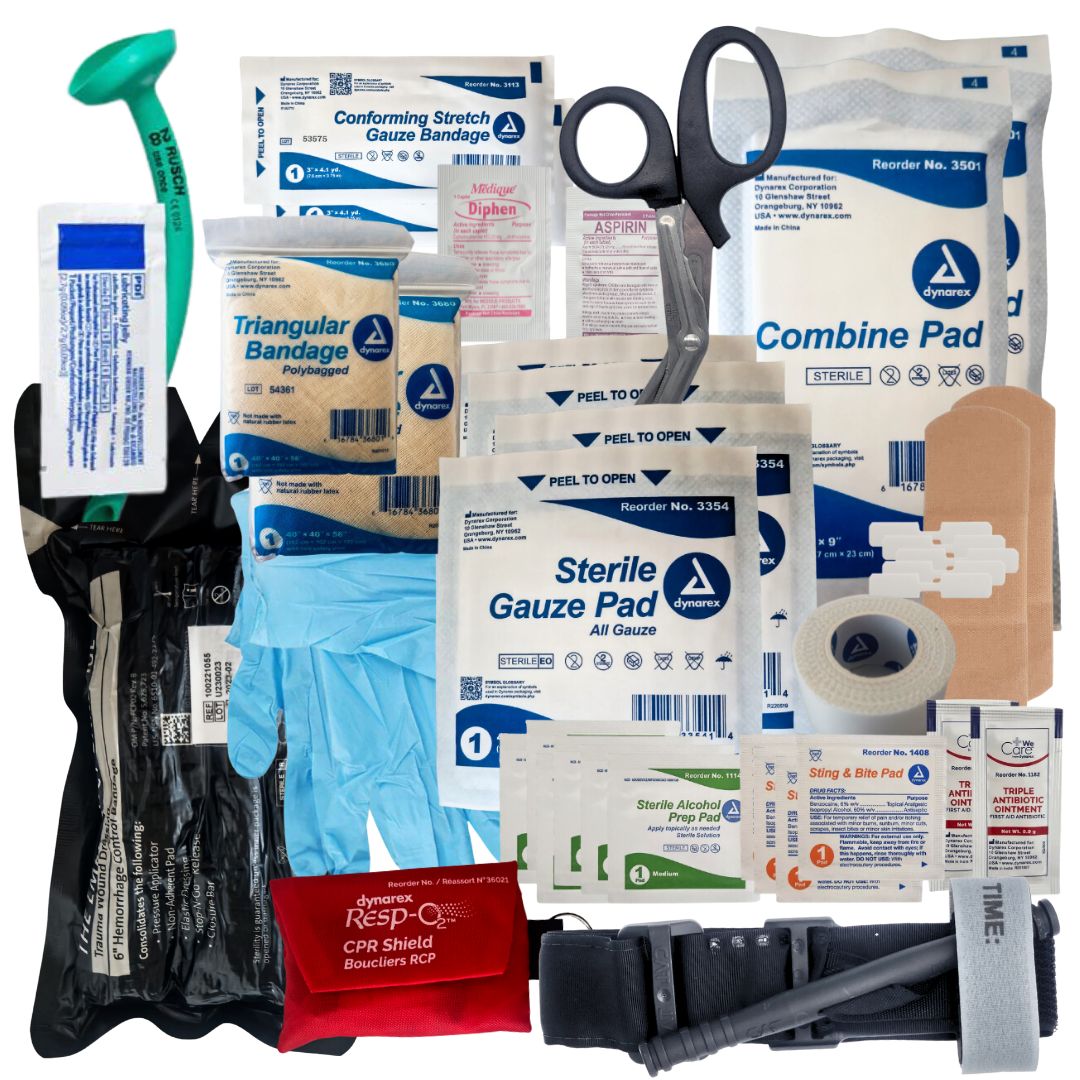
Contents vary, but many first responder kits include supplies for basic assessment, wound care, and protection from exposure. Depending on the setting and the responder’s training, a kit may contain:
- Personal protective equipment: Disposable gloves, eye protection, and face coverings appropriate to the situation.
- Basic wound-care supplies: Sterile gauze, dressings, adhesive bandages, medical tape, and antiseptic wipes.
- Bleeding-control supplies: Pressure dressings and, where appropriate, commercially manufactured tourniquets. These should be used only by people trained in their proper application.
- Assessment tools: A flashlight, trauma shears, and a notepad or incident documentation form. More advanced tools should be included only when responders are trained to use them.
- Basic support items: A CPR barrier device, emergency blanket, and other supplies selected for the environment and level of training.
- Communication and reference materials: Emergency contact information, site maps, and a concise checklist for reporting an incident.
Some equipment—such as airway devices, oxygen, medications, or advanced monitoring tools—may be appropriate for licensed or specially trained responders, but it is not suitable for every kit. Follow medical direction, organizational policy, and applicable laws when selecting these items. Do not include prescription medications for general use unless the organization has a lawful, clearly defined process for storing and administering them.
Training Matters
Responders should know where the kit is, how to access its contents, and how to use each item they may need. Training can include first aid, CPR, bleeding control, or other courses appropriate to the role. For workplace and organized response teams, training should reflect the organization’s emergency plan and local requirements.
In an emergency, check for hazards before approaching, call 911 when needed, and follow the dispatcher’s instructions. Provide care within the limits of your training. Avoid moving an injured person unless there is an immediate danger or movement is necessary to provide care.
Keep the Kit Ready
A medical kit needs routine attention. Create an inventory and inspection schedule, and check supplies after every use. Replace items that are expired, damaged, contaminated, or missing. Store the kit in a clearly marked, accessible location, and protect supplies from moisture, extreme temperatures, and unauthorized access when appropriate.
Make sure team members know how to report a used or incomplete kit. It can also help to post the kit’s location and the emergency procedure where people can find them quickly. For mobile kits, confirm that supplies are secured and remain usable under the conditions in which the vehicle or equipment is stored.
Choose a Kit That Fits the Role
There is no single first responder medical kit that works for every person or organization. Choose supplies based on realistic hazards, responder qualifications, local guidance, and available medical support. Review the kit and the response plan regularly, and arrange training before relying on specialized equipment.
A well-chosen, maintained, and familiar kit can support timely initial care. Its greatest value comes when it is part of a broader safety plan that includes trained people, clear communication, and prompt access to professional medical services.
7 Key Benefits of a First Responder Medical Kit
- Keeps essential medical supplies in one place.
- Helps responders act quickly in emergencies.
- Supports basic wound care and bleeding control.
- Can be tailored to specific hazards.
- Makes supplies easier to find and carry.
- Encourages preparedness and regular safety checks.
- Can support care while professional help is on the way.
5 Drawbacks of First Responder Medical Kits
- Can be expensive to equip and maintain.
- Supplies may expire or become damaged.
- Improper use can cause harm.
- Requires regular inspections and restocking.
- May not include equipment for every emergency.
Keeps essential medical supplies in one place.
A first responder medical kit keeps essential medical supplies organized in one convenient place, making them easier to find when time matters. Instead of searching through separate cabinets or bags, responders can quickly access items such as gloves, gauze, dressings, and other supplies suited to their training and setting. This organization can help reduce delays and support a more efficient response during an emergency.
Helps responders act quickly in emergencies.
A first responder medical kit helps responders act quickly in emergencies by keeping essential supplies organized and within easy reach. Instead of searching for individual items, responders can quickly access what they need to provide appropriate initial care while emergency services are on the way. This can save valuable time and help responders stay focused during a stressful situation.
Supports basic wound care and bleeding control.
A first responder medical kit supports basic wound care and bleeding control by keeping essentials such as sterile gauze, dressings, medical tape, and pressure bandages within reach. When used by someone with appropriate training, these supplies can help protect a wound and apply pressure while emergency medical services are on the way. Having them organized and ready can make it easier to respond promptly, but serious injuries still require professional medical care.
Can be tailored to specific hazards.
A first responder medical kit can be tailored to the specific hazards of its setting, making it more useful when an emergency occurs. For example, a workplace with heavy machinery may prioritize bleeding-control supplies, while an outdoor response team may add items suited to weather, remote locations, and longer waits for help. Choosing supplies based on likely risks, responder training, and local protocols helps ensure the kit is practical without including equipment people aren’t prepared to use.
Makes supplies easier to find and carry.
A first responder medical kit keeps essential supplies organized in one clearly defined place, making them easier to locate when time matters. Its compartments help responders quickly identify what they need, while a portable case makes it simpler to carry supplies to an injured person or move them between vehicles, work areas, and emergency scenes.
Encourages preparedness and regular safety checks.
A first responder medical kit encourages preparedness by keeping essential supplies organized and ready when an emergency occurs. Checking the kit regularly helps ensure that items are easy to find, fully stocked, and not expired or damaged. These routine safety checks can also remind teams to review emergency procedures and make sure responders know how to use the supplies.
Can support care while professional help is on the way.
A first responder medical kit can help trained responders provide basic, timely care while professional help is on the way. Supplies such as gloves, dressings, and bleeding-control equipment may support immediate needs until emergency medical personnel arrive. A kit does not replace professional treatment, but having appropriate supplies nearby can make it easier to respond promptly and safely.
Can be expensive to equip and maintain.
One drawback of a first responder medical kit is the cost of equipping and maintaining it. Quality supplies and specialized equipment can be expensive, and items may need regular replacement because they expire, get used, or become damaged. Organizations may also need to budget for secure storage, inspections, and training so responders can use the kit safely and effectively.
Supplies may expire or become damaged.
First responder medical kit supplies can expire, deteriorate, or become damaged over time, especially if exposed to heat, moisture, or rough handling. Expired or compromised items may not work as intended when they’re needed, potentially delaying care or creating additional risks. Regular inspections, proper storage, and prompt replacement of used or damaged supplies help keep the kit ready for an emergency.
Improper use can cause harm.
Improper use of a first responder medical kit can cause further harm, especially when someone uses equipment or treatments without proper training. For example, applying a tourniquet incorrectly or giving medication inappropriately may worsen an injury or delay needed care. Responders should use only supplies they understand, follow their training and local protocols, and call 911 when emergency medical help is needed.
Requires regular inspections and restocking.
A first responder medical kit requires regular inspections and restocking to remain dependable. Supplies may be used, damaged, or expire over time, and missing essentials can leave responders unprepared during an emergency. Keeping the kit ready takes time and organization: someone must check its contents, replace items, and make sure everything is stored properly.
May not include equipment for every emergency.
A first responder medical kit may not include the equipment needed for every type of emergency. Its contents are usually selected for common risks, available space, and the responder’s training, so specialized situations may require supplies that aren’t on hand. Check the kit’s contents against the hazards in your setting, know its limitations, and call 911 for emergencies that need advanced care.