Scout First Aid Kit: What to Pack and How to Use It
A well-stocked first aid kit helps scouts handle minor injuries during hikes, campouts, and other outdoor activities. It does not replace first aid training or professional medical care, but having the right supplies—and knowing how to use them—can make a difficult moment easier to manage.
What to Include
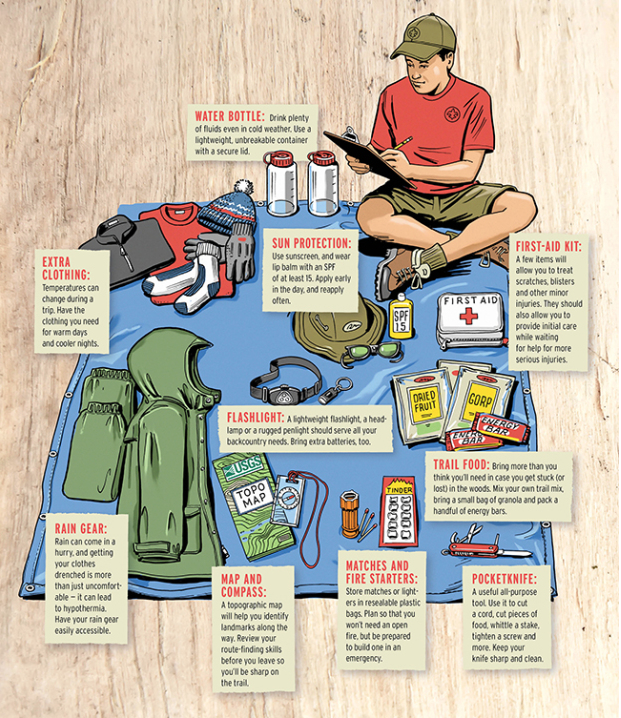
Choose a durable, water-resistant pouch that is easy to find in a backpack. Keep supplies organized and label the kit clearly. A basic scout first aid kit may include:
- Adhesive bandages in several sizes
- Sterile gauze pads and roller gauze
- Medical tape
- Antiseptic wipes or another appropriate wound-cleaning supply
- Disposable nitrile gloves
- Blunt-tip scissors and tweezers
- Elastic bandage for supporting a sprain
- Triangular bandage
- Blister-care supplies, such as moleskin or blister pads
- Instant cold pack
- CPR face shield or breathing barrier
- Emergency blanket
- Small bottle of hand sanitizer
- First aid instructions and emergency contact information
For longer trips or remote locations, leaders may carry additional supplies based on the group’s training, itinerary, and local guidance. Personal medications should be packed and managed according to the scout’s needs and the organization’s policies. Do not include medication for others unless authorized and appropriate.
Match the Kit to the Trip
The right kit depends on the activity, group size, trip length, weather, and how far the group will be from help. A short meeting may call for a compact kit, while a multi-day hike may require extra wound-care materials and supplies for blisters. Keep the kit accessible—not buried beneath other gear—and make sure at least one responsible adult knows where it is.
Before a trip, check local conditions and consider risks such as heat, cold, insects, rough terrain, and limited cell service. A first aid kit is only one part of preparation: bring enough water, dress for the weather, share the route and return time, and know how to contact emergency services.
Using First Aid Supplies Safely
Scouts should provide care only within their level of training and follow the direction of a qualified adult leader. Start by making sure the scene is safe. Use gloves when handling blood or other bodily fluids, and ask permission before helping someone who is able to respond. For a child, follow the organization’s safeguarding procedures and involve a responsible adult.
For a small cut or scrape, wash your hands or use sanitizer, put on gloves, and gently clean the injury with clean water or an appropriate wound-cleaning product. Cover it with a clean dressing. Seek medical advice for a deep or gaping wound, an injury that will not stop bleeding, signs of infection, or any wound that causes concern.
Call 911 for a life-threatening emergency, such as severe bleeding, trouble breathing, loss of consciousness, a suspected serious head or spine injury, or a severe allergic reaction. Do not move someone with a suspected neck or back injury unless remaining in place presents immediate danger. Follow emergency-dispatch instructions and your training while help is on the way.
Check and Restock the Kit
Inspect the kit before and after each outing. Replace used, damaged, wet, or expired items, and check that the scissors and other tools are clean and in working order. Store supplies in a cool, dry place, and review the contents periodically with a trained leader.
Training Matters
Even the best-equipped kit is less useful without practice. Scouts and leaders can take age-appropriate first aid and CPR courses through recognized providers. Training helps participants recognize emergencies, use supplies correctly, and understand when to get professional help.
A simple, well-maintained scout first aid kit supports safer adventures. Pack for the trip, know the limits of your training, and seek emergency help whenever an injury or illness may be serious.
Essential Tips for Assembling a Scout First Aid Kit
- Pack adhesive bandages in several sizes.
- Include sterile gauze pads and medical tape.
- Carry antiseptic wipes and disposable gloves.
- Add tweezers and blunt-tip scissors.
- Pack an elastic bandage for sprains.
- Include any personal medicines and allergy needs.
- Check expiration dates before each trip.
- Store the kit in a waterproof pouch.
- Learn first aid and tell an adult when someone is hurt.
Pack adhesive bandages in several sizes.
Pack adhesive bandages in several sizes so you can cover everything from small scrapes to larger cuts. A snug fit helps protect the wound from dirt and friction, especially during hikes and camp activities. Check that the bandages are clean, dry, and easy to reach in your scout first aid kit, and replace any that are used or damaged.
Include sterile gauze pads and medical tape.
Include sterile gauze pads and medical tape in a scout first aid kit to help cover and protect cuts, scrapes, and other minor wounds. Gauze can absorb blood and cushion an injury, while medical tape helps hold the dressing in place. Pack a few different gauze sizes, keep them clean and dry, and use them only after cleaning your hands and the wound as appropriate. For severe bleeding or a serious injury, seek emergency help and follow your first aid training.
Carry antiseptic wipes and disposable gloves.
Carry antiseptic wipes and disposable gloves in your scout first aid kit to help clean minor cuts and scrapes while reducing contact with blood or other bodily fluids. Put on a fresh pair of gloves before providing care, and use wipes according to the product directions. Remember that wipes are for minor injuries; serious wounds need prompt help from a qualified adult or medical professional.
Add tweezers and blunt-tip scissors.
Add tweezers and blunt-tip scissors to a scout first aid kit for small but useful tasks. Tweezers can help remove visible splinters or debris, while blunt-tip scissors can safely trim medical tape, gauze, or clothing around an injury. Keep both clean, store them securely, and use them only within your training; don’t dig into skin to remove an embedded object.
Pack an elastic bandage for sprains.
Pack an elastic bandage in your scout first aid kit to help support a sprained wrist or ankle. Wrap it snugly but not so tightly that it causes numbness, tingling, increased pain, or changes in skin color, and loosen it if any of these symptoms occur. An elastic bandage provides support but does not replace medical evaluation; seek help for severe pain, significant swelling, deformity, or difficulty bearing weight.
Include any personal medicines and allergy needs.
Pack any personal medicines a scout may need, along with clear instructions for when and how to use them. Include allergy supplies, such as a prescribed epinephrine auto-injector, and make sure responsible adult leaders know about relevant allergies and where the medication is stored. Follow your organization’s medication policies, keep medicines in their original labeled containers when possible, and check expiration dates before each trip.
Check expiration dates before each trip.
Check the expiration dates on first aid kit supplies before every trip. Some items, such as antiseptic wipes, ointments, and medications, may become less effective or unsuitable after they expire. Replace expired products, and check that sterile dressings and bandages are sealed and undamaged so your kit is ready when you need it.
Store the kit in a waterproof pouch.
Store your scout first aid kit in a waterproof pouch to protect bandages, gauze, and other supplies from rain, splashes, and damp gear. Choose a durable pouch that seals securely, label it clearly, and keep it somewhere easy to reach in an emergency. Check the contents after wet outings and replace anything that gets damaged or contaminated.
Learn first aid and tell an adult when someone is hurt.
Learn basic first aid so you can respond calmly when someone is injured, but only provide care that matches your training. Tell a responsible adult right away whenever someone is hurt, even if the injury seems minor. An adult can help assess the situation, provide appropriate care, and contact emergency services if needed.