First Aid Kits for Businesses: What to Include and How to Maintain Them
A well-stocked first aid kit can help employees respond to minor injuries while they wait for professional care. For businesses, however, simply buying a kit is not enough. Supplies should match workplace hazards, be easy to find, and be checked regularly. A clear plan also helps employees understand when to provide basic first aid and when to call 911.
Why Businesses Need Workplace First Aid Kits
Injuries can happen in any workplace, from offices and retail stores to warehouses, construction sites, and food-service businesses. Cuts, burns, sprains, eye irritation, and other incidents may require prompt attention. Having accessible supplies can help employees provide basic care until a person can get further medical assistance.
In the United States, OSHA’s general industry standard requires employers to have adequate first aid supplies readily available. The appropriate supplies depend on the workplace, its hazards, and the circumstances. Businesses should review applicable OSHA requirements and state or local rules, and consult a qualified safety professional when needed.
What Should a Business First Aid Kit Include?
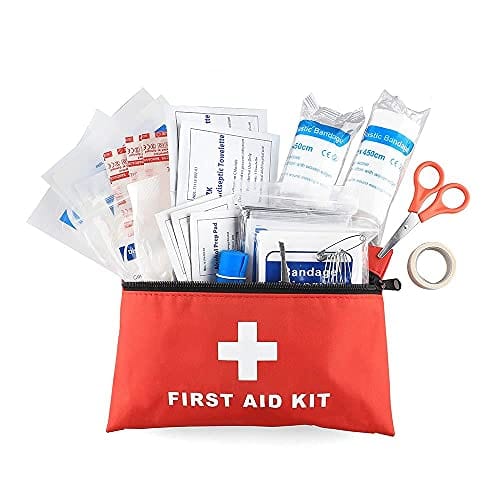
There is no single kit that fits every workplace. Start with a hazard assessment: consider the tasks employees perform, the number of people on site, the size and layout of the facility, and how quickly emergency medical services can reach it. A basic kit may include:
- Adhesive bandages in assorted sizes
- Sterile gauze pads and roller bandages
- Medical tape
- Antiseptic wipes or other appropriate wound-cleaning supplies
- Disposable, nonlatex gloves
- Scissors and tweezers
- Instant cold packs
- A CPR face shield or breathing barrier
- Burn dressings or burn-care supplies suited to the workplace
- An emergency blanket
- A first aid guide and a list of emergency contacts
Some workplaces may need additional supplies based on specific hazards. For example, facilities where chemicals are used may need readily accessible eyewash equipment, while worksites with burn, puncture, or severe bleeding risks may require specialized supplies and training. Do not add prescription medicines or rely on a kit to manage serious conditions without appropriate medical guidance.
Choose the Right Kit for the Workplace
When selecting a kit, consider the number of employees it is intended to serve, the work environment, and the types of injuries that are reasonably foreseeable. A small office may need different supplies than a manufacturing floor or a remote jobsite. Businesses can also review the current ANSI/ISEA Z308.1 standard for guidance on workplace first aid kit contents. Meeting a voluntary standard does not, by itself, establish that a kit is suitable for every workplace or satisfy every applicable requirement.
For larger facilities, one central kit may not be enough. Place kits where employees can reach them quickly, including in work areas that are far from the main office. Consider portable kits for field crews, company vehicles, and off-site events.
Make Kits Easy to Find and Use
Store kits in visible, clearly marked locations that are accessible during working hours. Keep them away from excessive heat, moisture, and other conditions that could damage supplies. Post signs or include kit locations on workplace maps, and make sure employees know where supplies are kept.
Instructions should be easy to understand and available near the kit. Employees should know how to report an injury, who to contact for help, and when to call 911. A first aid kit is not a substitute for emergency medical services or appropriate employee training.
Inspect and Restock Supplies
Assign a specific person or team to inspect each kit on a regular schedule. Checks should confirm that:
- The kit is present, accessible, and clearly marked
- Used supplies have been replaced
- Items are clean, sealed, and in usable condition
- Products have not expired
- The inventory still matches workplace hazards and staffing levels
Keep a simple inspection log with the date, the name of the person who checked the kit, and any supplies that were replaced. Restock promptly after an incident rather than waiting for the next scheduled inspection.
Connect First Aid Supplies to Your Emergency Plan
First aid kits are one part of a broader workplace safety plan. Businesses should also establish procedures for reporting injuries, contacting emergency services, assigning trained responders where appropriate, and documenting incidents. Employees should know how to respond to serious bleeding, burns, eye injuries, and other emergencies relevant to their work.
Businesses in flood-prone areas of Texas may also want to protect first aid supplies from water damage and include portable kits in evacuation plans. Keep kits in waterproof containers when appropriate, and make sure emergency supplies can be reached without entering a flooded area. Never walk or drive through floodwater to retrieve a kit or assist someone; call 911 when there is immediate danger.
Build a Practical First Aid Program
The most effective business first aid program combines suitable supplies, regular inspections, accessible locations, and clear procedures. Review the program whenever workplace tasks, staffing, or hazards change. By planning ahead, businesses can help employees respond more confidently to injuries while ensuring that serious emergencies receive prompt professional attention.
Business First Aid Kits: 7 FAQs About OSHA Requirements, Essential Supplies, and More
- What should be in a commercial first aid kit?
- How to get a first aid kit for free?
- What is the best commercial first aid kit?
- Do businesses need to have a first aid kit?
- What does OSHA require for a first aid kit?
- How many first aid kits does a company legally need?
- What are OSHA requirements for first aid kits?
What should be in a commercial first aid kit?
A commercial first aid kit should include supplies suited to the workplace’s hazards, employee count, and location. Common items include assorted adhesive bandages, sterile gauze pads, roller bandages, medical tape, antiseptic wipes, disposable gloves, scissors, tweezers, and instant cold packs. A CPR face shield and a basic first aid guide may also be useful. Workplaces with specific risks—such as chemical exposure, burns, or severe bleeding—may need additional equipment, training, or emergency facilities. Inspect the kit regularly, replace used or expired items, and check applicable OSHA requirements and current workplace first aid standards to ensure the supplies are appropriate.
How to get a first aid kit for free?
Businesses may be able to get a first aid kit at no cost through local emergency-preparedness programs, community organizations, safety grants, business associations, or promotions from insurers and safety suppliers. Contact your local health department, fire department, or small-business office to ask about current programs, and check eligibility, availability, and shipping costs. Free kits may be basic or limited, so review the contents and add supplies needed for your workplace hazards; employers are responsible for ensuring appropriate first aid supplies are readily available.
What is the best commercial first aid kit?
The best commercial first aid kit is one that matches your workplace’s hazards, number of employees, and location—not necessarily the largest or most expensive option. Choose a kit with clearly organized, accessible supplies and check that its contents align with applicable OSHA requirements and current ANSI/ISEA guidance. Higher-risk workplaces may need specialized supplies, such as eyewash equipment or burn-care items, so assess your specific hazards and restock the kit regularly.
Do businesses need to have a first aid kit?
Yes. In the United States, OSHA generally requires employers to provide adequate first aid supplies that are readily available, unless emergency medical services or a nearby infirmary can provide prompt treatment for employees’ injuries. The right supplies depend on the workplace’s hazards, size, and location, so businesses should review applicable OSHA and state or local requirements and keep kits accessible, stocked, and regularly inspected. A first aid kit does not replace emergency medical care or required employee training.
What does OSHA require for a first aid kit?
OSHA does not prescribe one standard list of items for every business first aid kit. Under its general industry rule, employers must ensure that adequate first aid supplies are readily available, based on workplace hazards and circumstances. If medical care is not in near proximity, an adequately trained person must be available to provide first aid. Businesses should assess their specific risks, keep supplies accessible and stocked, and check any additional requirements that apply to their industry or location.
How many first aid kits does a company legally need?
In the U.S., OSHA generally does not set a specific number of first aid kits per company or employee. Instead, required supplies must be readily available, with the number and placement of kits appropriate to workplace hazards, facility size and layout, and employees’ access to them. A large or spread-out worksite may need multiple kits so workers can reach supplies promptly. Check applicable state and local requirements, and assess the workplace against OSHA rules and relevant industry guidance.
What are OSHA requirements for first aid kits?
OSHA generally requires employers to have adequate first aid supplies readily available, but it does not prescribe one standard kit or a universal list of contents for every workplace. Employers should choose supplies based on workplace hazards, the number of employees, and how quickly professional medical care is available; OSHA also requires a person with appropriate first-aid training to be readily available when there is no infirmary, clinic, or hospital in near proximity to the workplace. Check the standards that apply to your industry and state, and consider recognized guidance such as ANSI/ISEA Z308.1 when selecting and maintaining kits.