EMT Kit: Essential Supplies for Emergency Medical Response
An EMT kit is a collection of medical supplies used to assess and care for people during an emergency. Emergency medical technicians and other trained responders use these kits to provide initial care before a patient reaches a hospital. The exact contents vary based on the responder’s training, the type of emergencies they handle, and local protocols.
For households, workplaces, vehicles, and community groups, a well-organized first aid kit can also help with minor injuries while professional help is on the way. A general first aid kit is not the same as a professional EMT kit, however, and should not be used to perform procedures that require training or authorization.
What Is Usually in an EMT Kit?
Professional kits are commonly organized by purpose so responders can locate supplies quickly. Depending on the kit, contents may include:
- Personal protective equipment: Medical gloves, eye protection, masks, and hand-cleaning supplies help reduce exposure to blood and other potentially infectious materials.
- Wound-care supplies: Sterile gauze, dressings, adhesive bandages, medical tape, and trauma pads can be used to cover wounds and help control bleeding.
- Assessment tools: Items such as a stethoscope, blood pressure cuff, thermometer, penlight, and pulse oximeter may help trained responders assess a patient.
- Basic care supplies: Scissors, tweezers, instant cold packs, and disposable blankets may be included for common first aid needs.
- Resuscitation equipment: Some kits contain a CPR face shield or pocket mask. Automated external defibrillators (AEDs) are usually stored separately, though they may be part of a larger response setup.
- Splinting and support items: A professional kit may include materials for supporting an injured limb, depending on the responder’s role and training.
- Documentation supplies: Forms, labels, and writing tools can help responders record observations and care provided.
Advanced equipment, medications, and airway supplies may be carried by licensed EMS personnel, but they are not appropriate for every kit or every user. Use must follow applicable training, medical direction, and local regulations.
Choosing an EMT or First Aid Kit
Before buying a kit, consider who will use it and what situations it is intended to address. A kit for a home or car should generally focus on basic first aid. A kit for a trained responder may need specialized equipment that matches the responder’s certification and protocols.
- Match the kit to its purpose. Consider likely hazards, the number of people it may serve, and how quickly emergency services can reach the location.
- Check the contents. Review the supply list rather than relying on the kit’s name or advertised item count. Some large kits include many small items but lack essential supplies.
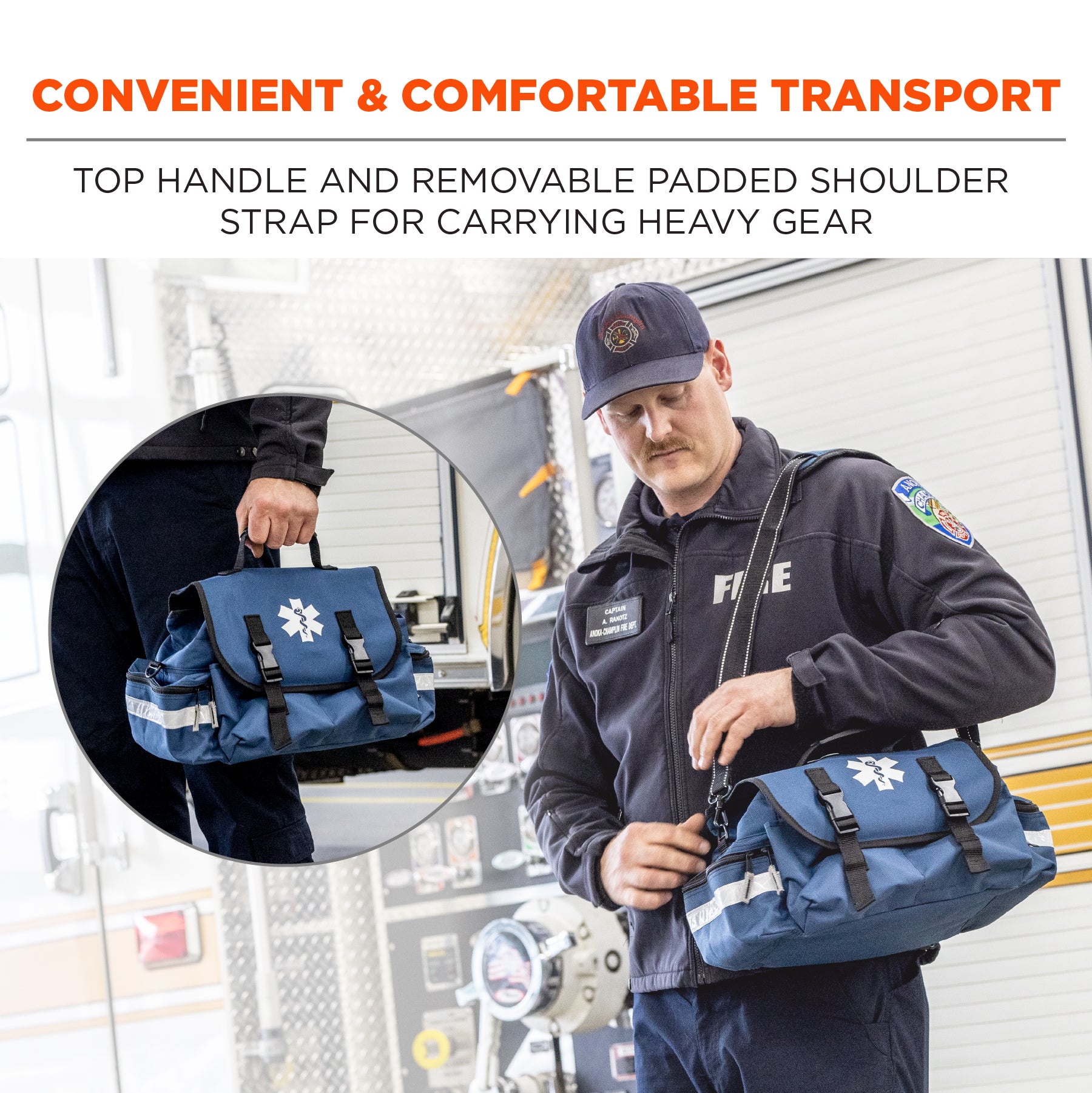
- Choose a practical bag. Look for durable material, clear labeling, secure closures, and compartments that make supplies easy to find.
- Consider portability. A workplace response kit may be larger than one carried in a vehicle or worn by a responder.
- Plan for replenishment. Select a kit with supplies that can be inspected and replaced individually.
- Follow workplace and local requirements. Employers, event organizers, and response agencies may have specific equipment standards.
Keeping a Kit Ready
A kit is only useful if its contents are available, clean, and in good condition. Inspect it regularly and after each use. Replace used, damaged, wet, or expired items, and check that packages remain sealed when sterility is required. Store the kit in a dry, accessible place, and make sure people who may need it know where it is located.
For medications or temperature-sensitive products, follow the manufacturer’s storage instructions. Keep items in their original packaging when possible, and do not use products that are expired or appear compromised.
Training and Safe Use
Having an EMT kit does not replace emergency response training. In a life-threatening situation, call 911 as soon as possible and follow the dispatcher’s instructions. Use only equipment and techniques you have been trained to use. Avoid giving medications or performing invasive procedures unless you are authorized and properly trained to do so.
For public settings, consider CPR and first aid training, including how to recognize an emergency and use an AED. Training can help people act more confidently while professional responders are on the way.
Conclusion
The right EMT kit depends on the user, setting, and level of training. A carefully selected and regularly checked kit can support a faster, more organized response, but supplies alone are not a substitute for professional care. Choose equipment that fits its intended use, learn how to use it safely, and contact emergency services when urgent medical care is needed.
7 Essential Tips for Maintaining and Using Your EMT Kit
- Check your EMT kit before every shift.
- Keep supplies clean, sealed, and organized.
- Replace expired or damaged items promptly.
- Restock used supplies after each call.
- Store medications according to instructions.
- Wear appropriate protective equipment.
- Follow your agency’s protocols and training.
Check your EMT kit before every shift.
Check your EMT kit before every shift to make sure essential supplies are present, accessible, and ready to use. Replace items used on previous calls, inspect packaging for damage, and check expiration dates on medications and other time-sensitive supplies. Confirm that equipment is clean and functioning properly, and report or replace anything missing or defective according to your agency’s procedures. A quick, consistent check can help prevent delays when every second matters.
Keep supplies clean, sealed, and organized.
Keep EMT kit supplies clean, sealed, and organized so they’re ready to use when an emergency occurs. Store sterile items in their original packaging, protect the kit from moisture and dirt, and return supplies to clearly labeled compartments after each use. Check the kit regularly for damaged packaging, missing items, and expired products, and replace anything that may no longer be safe or effective.
Replace expired or damaged items promptly.
Replace expired or damaged items in your EMT kit promptly to ensure supplies are safe and ready to use during an emergency. Check expiration dates and packaging regularly, and discard anything that is torn, wet, contaminated, or no longer works properly. Restock used items as soon as possible so the kit remains complete when it’s needed.
Restock used supplies after each call.
Restock any supplies used after each call so the EMT kit is ready for the next emergency. Check that replacement items are in good condition, properly sealed, and not expired, then return them to their designated compartments. A quick inventory after every response helps prevent delays and ensures essential equipment is available when it’s needed.
Store medications according to instructions.
Store any medications in your EMT kit exactly as directed on the label or by a pharmacist. Some need to be kept within a specific temperature range, protected from light or moisture, or stored separately from other supplies. Check expiration dates during routine kit inspections, and replace medications that are expired, damaged, or have been stored improperly. Never use medication if its packaging is compromised or its condition is uncertain.
Wear appropriate protective equipment.
Wear appropriate protective equipment whenever using an EMT kit. Gloves help reduce contact with blood and bodily fluids, while eye protection and a mask may provide additional protection when exposure is possible. Choose equipment that fits properly, check it for damage before use, and replace it if torn or contaminated. Follow your training and local safety protocols, and clean your hands after removing gloves.
Follow your agency’s protocols and training.
Always follow your agency’s protocols and the training you’ve received when using an EMT kit. Procedures, approved equipment, and scope of practice can vary by role and location, so don’t use unfamiliar supplies or perform care beyond your authorization. If you’re unsure what to do, contact medical direction or follow your agency’s established guidance.