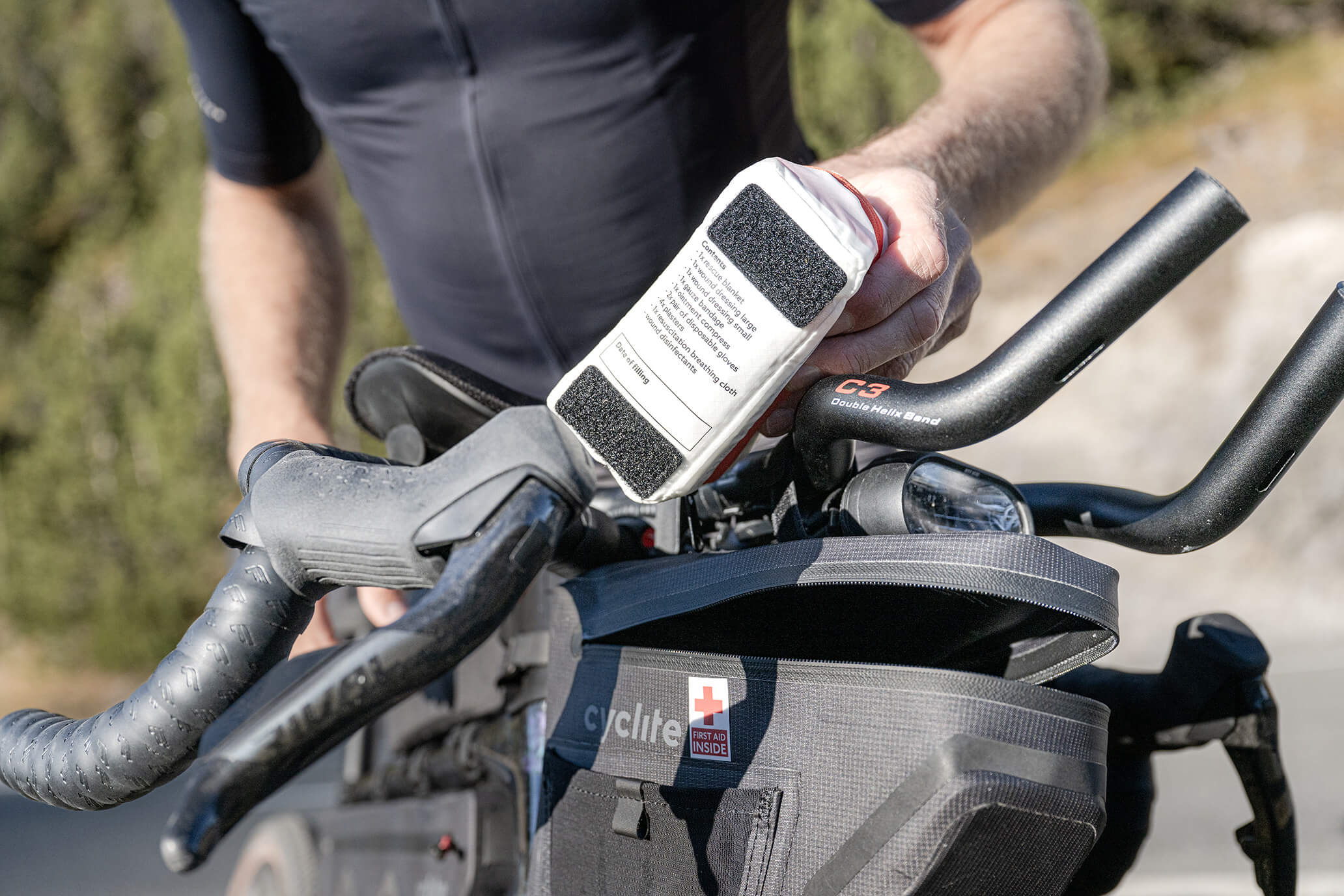
Bicycle First Aid Kit: What to Pack and How to Use It
A bicycle first aid kit can help you handle minor cuts, scrapes, blisters, and other common problems on a ride. It can also provide useful supplies while you wait for help after a more serious crash. A good kit is compact, weather-resistant, and suited to the length of your rides, the size of your group, and how far you’ll be from assistance.
What to Include in a Bicycle First Aid Kit
Pack supplies in a small waterproof pouch or sealed bag. Check the contents regularly and replace anything that is used, damaged, or past its expiration date.
- Disposable nitrile gloves: Help reduce contact with blood and other body fluids.
- Adhesive bandages: Carry several sizes for small cuts and blisters.
- Sterile gauze pads: Useful for covering wounds or applying pressure to control bleeding.
- Medical tape: Helps secure gauze and dressings.
- Antiseptic wipes: Useful for cleaning around a wound. Clean minor wounds with safe, clean water when available.
- Blister care: Include blister pads or moleskin, especially for long rides.
- Small scissors and tweezers: Scissors can trim tape or dressings; tweezers may help remove a small, superficial splinter.
- Elastic wrap: Can support a minor sprain or hold a dressing in place. It should not be wrapped so tightly that it causes numbness, tingling, increased pain, or color changes.
- Emergency blanket: A lightweight blanket can help keep an injured rider warm while waiting for assistance.
- Personal necessities: Add any prescribed emergency medication or medical information that a rider may need. Store medications according to their labels and consider heat exposure.
For longer or remote rides, a group may carry additional dressings and supplies, but extra gear is most useful when someone knows how to use it. A first aid or wilderness first aid course can help riders respond more confidently.
First Aid for Common Cycling Injuries
Cuts and Scrapes
Move away from traffic and make sure the area is safe. Put on gloves if available. For a minor wound, rinse away dirt with clean water, apply gentle pressure if it is bleeding, and cover it with a clean dressing. Seek medical care if the wound is deep, gaping, heavily contaminated, or does not stop bleeding with steady pressure.
Blisters
Reduce friction by stopping to adjust footwear, socks, or gloves. Cover an intact blister with a blister pad or clean dressing. Avoid popping it during a ride; broken skin can become more painful and prone to infection.
Suspected Sprains or Fractures
Stop riding and avoid putting weight on a painful limb. Support it in a comfortable position and arrange medical evaluation. Do not try to straighten a deformed limb or force movement. Get emergency help for severe pain, obvious deformity, loss of feeling, or a limb that becomes pale, blue, or cold.
Head Injuries
A rider who has hit their head should stop riding. Call emergency services for loss of consciousness, confusion, repeated vomiting, seizure, worsening headache, unusual behavior, or difficulty waking. Do not leave the injured person alone. A helmet cannot rule out a concussion or other serious injury.
When to Call Emergency Services
Call 911 in the United States for life-threatening injuries, severe bleeding, trouble breathing, suspected spinal injury, loss of consciousness, or any situation that cannot be safely managed at the scene. Share your location clearly; on remote routes, note trail names, road crossings, mile markers, or nearby landmarks. Do not move someone with a suspected neck or back injury unless they are in immediate danger.
Carry the Kit Safely
Keep the kit somewhere easy to reach, such as a jersey pocket, handlebar bag, or top-tube bag. Tell riding partners where it is. A kit should complement—not replace—basic first aid knowledge, a charged phone, and a plan for contacting help. Before setting out, check local conditions and consider how long emergency responders may take to reach your route.
Make It Part of Your Ride Routine
A small, well-maintained bicycle first aid kit can make minor problems easier to manage and help a group respond while assistance is on the way. Tailor the contents to the ride, keep supplies dry, and learn how to use them before an emergency happens.
Bicycle First Aid and Safety Kits: 8 Frequently Asked Questions
- What should a bike safety kit include?
- What is the first aid for cycling injuries?
- What should be in a first aid kit for cycling?
- What does ifak kit stand for?
- What are 10 items in a first aid kit?
- What to put in a bicycle first aid kit?
- What are 10 things every cyclist needs?
- What is the 75% rule in cycling?
What should a bike safety kit include?
A bike safety kit should include basic first aid supplies, such as disposable gloves, adhesive bandages, sterile gauze, medical tape, antiseptic wipes, and blister pads, along with any personal medications you may need. For roadside repairs, carry a spare tube or patch kit, tire levers, a compact pump or CO₂ inflator, and a multitool. Add a charged phone, identification, and emergency contact information, and consider an emergency blanket for longer or remote rides. Choose compact, weather-resistant supplies, and tailor the kit to your route and riding conditions.
What is the first aid for cycling injuries?
For cycling injuries, first move out of traffic if it is safe, then check the rider and call 911 for severe bleeding, trouble breathing, loss of consciousness, suspected head, neck, or back injury, or other serious symptoms. For a minor cut or scrape, use clean water to rinse it, apply steady pressure if it is bleeding, and cover it with a clean dressing. Stop riding if there may be a sprain, fracture, or concussion, and seek medical care; don’t move someone with a suspected spinal injury unless they are in immediate danger.
What should be in a first aid kit for cycling?
A cycling first aid kit should include disposable gloves, adhesive bandages in several sizes, sterile gauze pads, medical tape, antiseptic wipes, blister pads or moleskin, tweezers, small scissors, and an elastic wrap. For longer or remote rides, consider adding an emergency blanket and any personal medications you may need. Pack supplies in a compact, waterproof pouch, check them regularly, and carry only items you know how to use.
What does ifak kit stand for?
IFAK stands for “Individual First Aid Kit.” It’s a compact kit designed to carry essential first aid supplies for one person, often for treating urgent injuries until professional help is available. A bicycle IFAK may include gloves, gauze, bandages, medical tape, and a tourniquet if the rider is trained to use one. Contents should match the ride and the user’s training; an IFAK does not replace emergency services or first aid instruction.
What are 10 items in a first aid kit?
A bicycle first aid kit can include these 10 useful items: adhesive bandages, sterile gauze pads, medical tape, antiseptic wipes, disposable nitrile gloves, small scissors, tweezers, blister pads, an elastic wrap, and an emergency blanket. Keep supplies in a compact, waterproof pouch, check them regularly, and learn how to use them before heading out.
What to put in a bicycle first aid kit?
A bicycle first aid kit should include disposable nitrile gloves, assorted adhesive bandages, sterile gauze pads, medical tape, antiseptic wipes, blister pads or moleskin, tweezers, small scissors, and an elastic wrap. For longer or remote rides, consider adding an emergency blanket and any personal medications you may need. Pack everything in a compact, waterproof pouch, check supplies regularly, and learn how to use them.
What are 10 things every cyclist needs?
Every cyclist should carry a properly fitted helmet, a bicycle first-aid kit, a spare tube, tire levers, a mini pump or CO₂ inflator, a bike multitool, water, a charged cell phone, identification, and a front and rear light. These essentials help protect you, handle common roadside problems, stay hydrated, and make it easier to get help if something goes wrong. Adjust your gear for the length of your ride, weather, and access to assistance.
What is the 75% rule in cycling?
The “75% rule” in cycling is an informal training guideline, not a rule about first aid kits: it generally suggests doing about 75% of your riding at an easy, conversational effort and the remaining time at higher intensities. The exact meaning varies among coaches, and training plans should be adjusted to your fitness, goals, and health. Regardless of pace or distance, carry a suitable first aid kit and know how to get help if someone is injured.