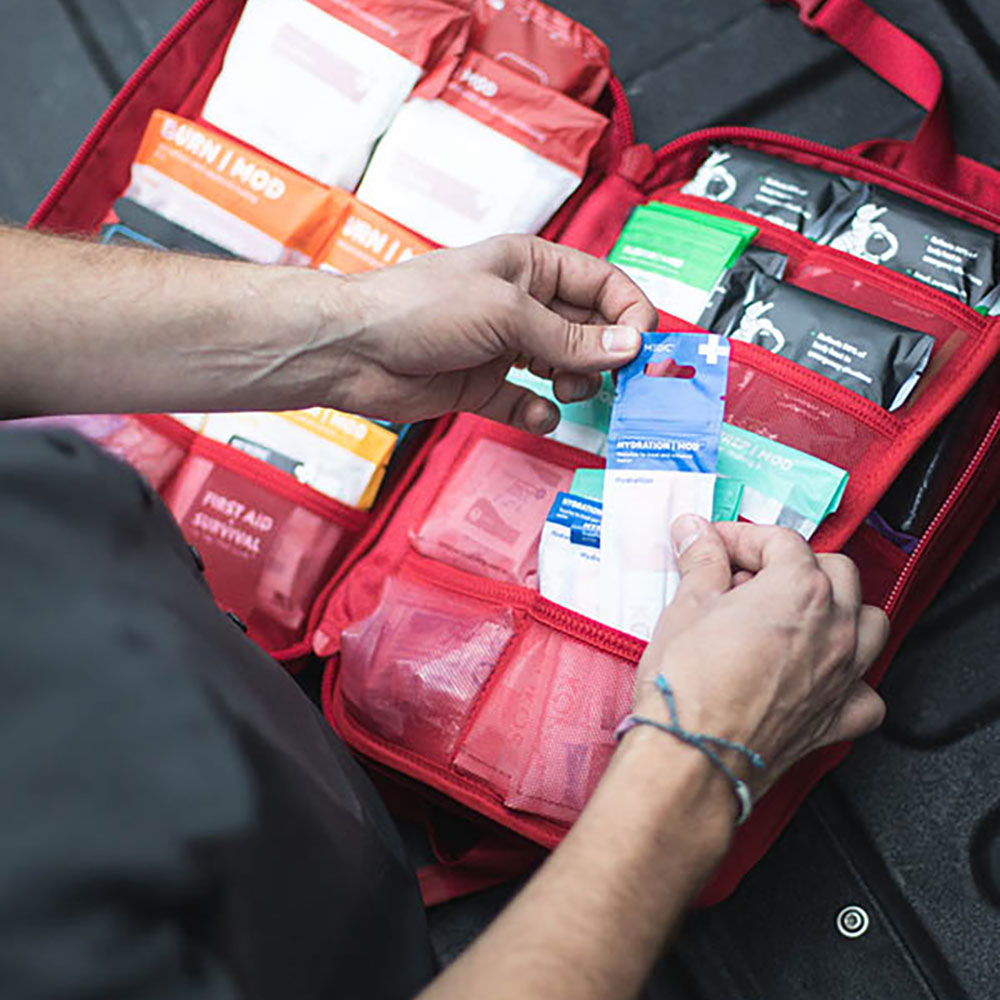
Building a Medic Kit for Emergencies
A well-stocked medic kit can help manage minor injuries while waiting for professional care. During floods, storms, and other emergencies, roads may be blocked and pharmacies may be unavailable, so keeping essential supplies together can make a difference. A home kit should be easy to find, clearly labeled, and checked regularly.
What to Include
Choose supplies based on household size, medical needs, and the kinds of emergencies likely in the area. A basic kit may include:
- Adhesive bandages in several sizes
- Sterile gauze pads, roller bandages, and medical tape
- Antiseptic wipes and antibiotic ointment
- Disposable gloves and small scissors
- tweezers and a digital thermometer
- A CPR face shield or breathing barrier
- Instant cold packs
- A first-aid guide and emergency contact information
- Hand sanitizer and a small flashlight with spare batteries
Include personal essentials, too. These may include prescription medicines, copies of prescriptions, allergy information, and supplies for conditions such as asthma or diabetes. Store medicines according to their labels, and ask a pharmacist or health care professional about safe storage and replacement schedules.
Prepare for Flood Conditions
Floodwater can contain sewage, chemicals, and sharp debris. Keep the medic kit in a waterproof container or a sealed bag, and store it above expected flood levels. Consider adding extra gloves, clean water, hand-cleaning supplies, and a way to protect important medical documents. Avoid using floodwater to clean wounds or equipment.
A first-aid kit is not a substitute for emergency services. Call 911 for severe bleeding, trouble breathing, signs of shock, major injuries, or other life-threatening conditions. If someone has been exposed to floodwater and develops illness or an infected wound, seek medical advice promptly.
Keep the Kit Ready
Check the kit at least twice a year and after using it. Replace expired or damaged items, restock anything that is missing, and make sure household members know where the kit is located. Keep a smaller version in a vehicle or evacuation bag, and review basic first-aid training so supplies can be used safely.
With thoughtful preparation and regular checks, a medic kit can support safer responses to everyday injuries and help households be better prepared when an emergency occurs.
5 Essential Tips for a Well-Prepared First Aid Kit
- Keep your medic kit in a clearly labeled, easy-to-reach place.
- Check expiration dates and replace used supplies regularly.
- Include bandages, gauze, antiseptic wipes, and medical tape.
- Add any personal medications and allergy information.
- Learn how to use each item before an emergency.
Keep your medic kit in a clearly labeled, easy-to-reach place.
Keep your medic kit in a clearly labeled, easy-to-reach place so everyone in your household can find it quickly during an emergency. Choose a spot that’s easy to access but protected from moisture, heat, and children who may get into medical supplies. Let family members know where it is, and return the kit to the same location after each use.
Check expiration dates and replace used supplies regularly.
Check your medic kit regularly to make sure every item is safe and ready to use. Replace expired medications and supplies, and restock anything you’ve used, such as bandages, gauze, or antiseptic wipes. A quick check every few months—and after each use—helps ensure your kit is prepared when you need it.
Include bandages, gauze, antiseptic wipes, and medical tape.
Include bandages, gauze, antiseptic wipes, and medical tape in your medic kit to help care for minor cuts and scrapes. Bandages can cover small wounds, while gauze and medical tape can protect larger areas or hold a dressing in place. Use antiseptic wipes to clean around a wound, following the product instructions, and replace used or expired supplies regularly.
Add any personal medications and allergy information.
Add any personal medications and allergy information to your medic kit so essential details are easy to find during an emergency. Include a current medication list with dosages, known allergies, and relevant medical conditions, along with copies of prescriptions if possible. Check the information regularly and keep medicines in their original packaging, following storage instructions and replacing them as needed.
Learn how to use each item before an emergency.
Learn how to use every item in your medic kit before an emergency happens. Read the instructions, practice with supplies such as bandages and a thermometer, and take a first-aid or CPR course if possible. Knowing what each item is for—and when to seek professional help—can make it easier to respond calmly and safely when someone is injured.