First Aid and Trauma Kits: What to Keep and How to Use Them
A well-stocked first aid kit can help you handle minor injuries, while a trauma kit contains supplies intended for serious, potentially life-threatening bleeding and injuries. Both can be useful at home, in a vehicle, at work, or during outdoor activities—but supplies are only part of being prepared. Knowing when to call for help and how to use the items safely matters just as much.
First Aid Kit vs. Trauma Kit
A first aid kit is generally designed for common problems such as small cuts, scrapes, blisters, and minor burns. A trauma kit focuses on severe injuries, especially major bleeding. Some kits combine both types of supplies.
No kit replaces professional medical care. Call 911 for a life-threatening emergency, such as severe bleeding, trouble breathing, loss of consciousness, a serious burn, or a suspected major injury. Follow the dispatcher’s instructions.
What to Include in a Basic First Aid Kit
Choose supplies that match the needs of the people who may use the kit and the setting where it will be kept. A basic kit may include:
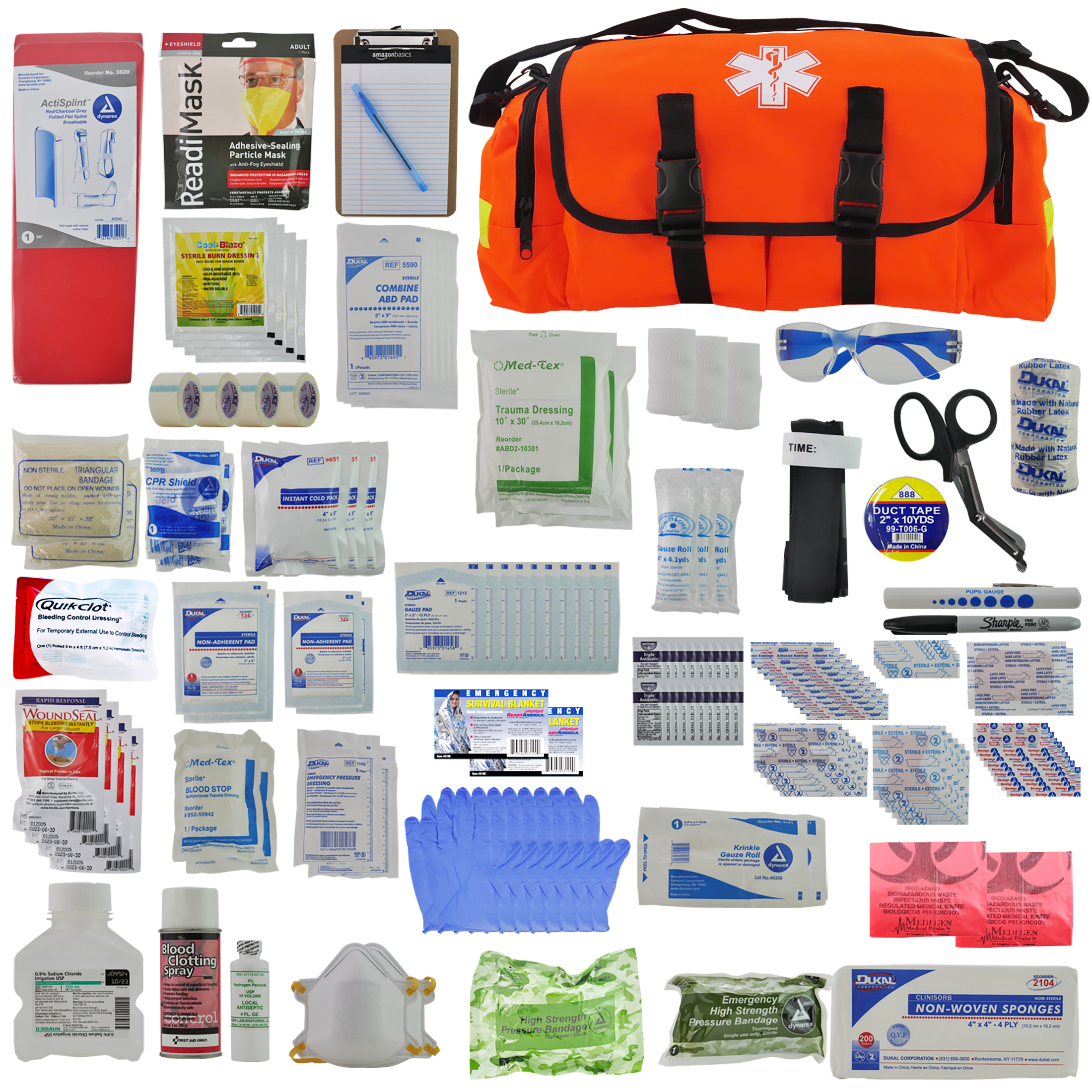
- Adhesive bandages in several sizes
- Sterile gauze pads and roller bandages
- Medical tape
- Antiseptic wipes and disposable gloves
- Small scissors and tweezers
- Instant cold pack
- Burn dressing or a clean, nonstick dressing
- CPR face shield or breathing barrier
- Emergency blanket
- First aid instructions
- Personal medications and allergy information, as appropriate
Check medication labels and expiration dates, and store supplies according to their instructions. Keep medications in their original packaging when possible, and avoid including medicine that may be unsuitable for someone who could use the kit.
What to Include in a Trauma Kit
A trauma kit may contain supplies such as:
- Several pairs of nitrile gloves
- Large sterile gauze pads and wound dressings
- Pressure bandages
- Commercial tourniquet
- Hemostatic gauze, if the user has been trained to use it
- Trauma shears
- Marker for recording the time a tourniquet is applied
- Emergency blanket
Trauma supplies should be genuine, unexpired, and stored as directed by the manufacturer. Training is especially important for tourniquets and hemostatic dressings. Do not rely on improvised devices or use a product if you are unsure how it works; follow its instructions and the guidance of emergency dispatchers.
How to Respond to Severe Bleeding
- Make sure the scene is safe. Use gloves or another barrier if available, and avoid direct contact with blood.
- Call 911. Ask someone nearby to call while you help, if possible.
- Apply firm, steady pressure. Use gauze or a clean cloth on the wound. Keep pressure on it and follow the dispatcher’s instructions.
- Use a tourniquet only when appropriate. If trained, follow the device’s instructions and place it as directed for life-threatening bleeding from an arm or leg. Do not loosen or remove it; leave that to medical professionals.
- Keep the injured person warm and still. Reassure them and watch their breathing and responsiveness until help arrives.
If an object is embedded in a wound, do not pull it out. Apply pressure around it, not directly on the object, and wait for professional care. Avoid cleaning or probing a severe wound.
Use First Aid Safely
For a minor cut, wash your hands, rinse the wound with clean running water, and cover it with a clean dressing. Seek medical advice for wounds that are deep, contaminated, caused by an animal or human bite, or showing signs of infection. A healthcare professional can also advise whether a tetanus shot is needed.
For a burn, cool the area with clean, cool running water as soon as possible. Do not apply ice, butter, or ointments to a serious burn. Get urgent medical help for large or deep burns, burns to the face or hands, or burns involving breathing difficulty.
Store and Maintain Your Kits
- Keep kits in a clearly marked, easy-to-reach location.
- Protect supplies from heat, moisture, and direct sunlight.
- Check the kit regularly and replace used, damaged, or expired items.
- Make sure household members or coworkers know where the kit is.
- Consider first aid and CPR training from a recognized provider.
A kit is most useful when it is suited to its location, kept up to date, and paired with practical training. In an emergency, prioritize scene safety, call 911 when needed, and follow the instructions of emergency responders.
First Aid and Trauma Kit FAQs: Supplies, Severe Bleeding, and When to Call 911
- What is the difference between a first aid kit and a trauma kit?
- What should I include in a basic first aid kit?
- What supplies should a trauma kit contain?
- How do I use a tourniquet to control severe bleeding?
- How often should I check and replace items in my first aid or trauma kit?
- When should I call 911 instead of treating an injury with a first aid kit?
What is the difference between a first aid kit and a trauma kit?
A first aid kit is intended for common, usually minor injuries, such as small cuts, scrapes, blisters, and minor burns. It typically contains bandages, gauze, antiseptic wipes, and other basic supplies. A trauma kit is designed for serious, potentially life-threatening injuries—especially severe bleeding—and may include pressure dressings, a tourniquet, and specialized gauze. Some kits combine both types of supplies. Trauma equipment should be used according to its instructions, and training is especially important for items such as tourniquets. Call 911 for a life-threatening emergency.
What should I include in a basic first aid kit?
A basic first aid kit should include adhesive bandages in several sizes, sterile gauze pads, roller bandages, medical tape, antiseptic wipes, disposable gloves, tweezers, small scissors, and an instant cold pack. You may also want a CPR face shield, an emergency blanket, and a first aid guide. Add personal medications or supplies for specific needs, and check the kit regularly to replace used or expired items. Keep it in a dry, easy-to-reach place, and make sure everyone knows where it is.
What supplies should a trauma kit contain?
A trauma kit should contain supplies for controlling severe bleeding and protecting the person providing care, such as nitrile gloves, sterile gauze, a pressure dressing, a commercial tourniquet, trauma shears, and an emergency blanket. Hemostatic gauze may also be included, but it should be used only by someone trained to do so. Choose quality, unexpired supplies and follow each product’s instructions. A trauma kit does not replace professional care: call 911 for life-threatening injuries, and get training before using specialized equipment such as a tourniquet.
How do I use a tourniquet to control severe bleeding?
For life-threatening bleeding from an arm or leg, call 911 and apply firm, direct pressure while help is on the way. If you have a commercial tourniquet, follow its instructions: place it around the injured limb above the wound, between the wound and the torso, but not over a joint, then tighten it until the bleeding stops. Note the time it was applied and tell emergency responders. Do not loosen or remove the tourniquet; leave that to medical professionals. If possible, get hands-on training so you can use one correctly in an emergency.
How often should I check and replace items in my first aid or trauma kit?
Check your first aid or trauma kit at least every six months, and after each use, to make sure supplies are complete, clean, undamaged, and easy to access. Replace expired medications and sterile products, as well as anything that is opened, wet, torn, or otherwise compromised. Follow manufacturers’ storage and expiration guidance, especially for tourniquets, hemostatic dressings, and other trauma supplies, and replace items promptly if their condition is uncertain.
When should I call 911 instead of treating an injury with a first aid kit?
Call 911 for any injury that may be life-threatening or needs immediate medical care, including severe or uncontrolled bleeding, trouble breathing, loss of consciousness, confusion, seizures, chest pain, signs of shock, a serious burn, a suspected head, neck, or spine injury, or a deep wound or major bone injury. If you’re unsure how serious the injury is, call 911 and follow the dispatcher’s instructions rather than delaying care to treat it yourself.