How to Build an Emergency Medicine Kit
An emergency medicine kit can help you manage minor health needs when a pharmacy is closed, you are traveling, or severe weather disrupts access to supplies. It is not a substitute for professional medical care, but keeping essential items together can make it easier to respond calmly and safely.
Start with Your Household’s Needs
There is no one-size-fits-all kit. Consider everyone who may need to use it, including children, older adults, and people with disabilities or ongoing health conditions. Ask household members what they rely on, and check with a healthcare professional or pharmacist if you are unsure what to include.
Common items to consider include:
- Prescription medicines: Keep an up-to-date list of medications, doses, allergies, and prescribing clinicians. When possible, maintain an emergency supply according to your prescription and insurance rules. Do not stop or change a prescribed medicine without professional guidance.
- Over-the-counter medicines: Consider familiar products for issues such as pain or fever, allergies, stomach upset, and cough or congestion. Choose products appropriate for the people in your household and follow the label directions.
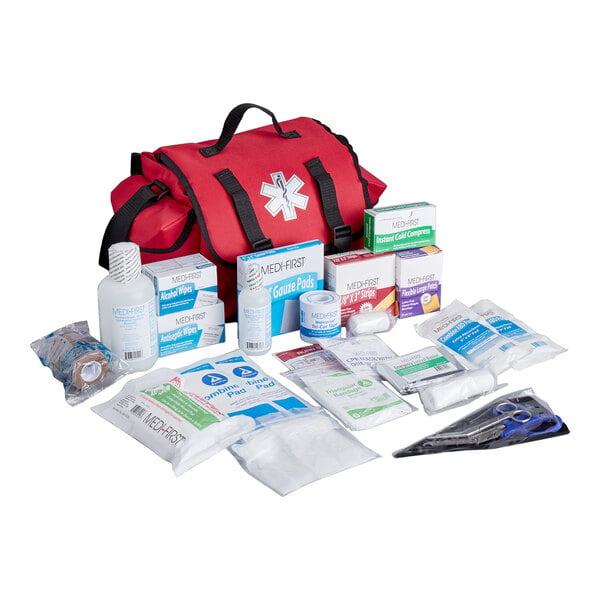
- First-aid supplies: Include adhesive bandages, sterile gauze, medical tape, antiseptic wipes, disposable gloves, tweezers, and a digital thermometer.
- Personal medical supplies: Include items such as an inhaler, glucose-monitoring supplies, or other prescribed equipment if a household member uses them. Store and transport them according to the manufacturer’s instructions.
- Reference information: Keep emergency contacts, health insurance details, medication instructions, and copies of important medical information in a waterproof pouch.
Store Medicines Safely
Keep medicines in their original packaging whenever possible. Labels help identify the product, dosage, expiration date, and storage requirements. Store the kit in a cool, dry place away from direct sunlight, moisture, and children. A locked container may be appropriate in households with young children or anyone at risk of accidentally taking medicine.
Heat and humidity can damage some medicines, so a car or garage may not be a suitable storage location. If a medicine requires refrigeration, follow its storage instructions and ask a pharmacist what to do if power is lost. Do not use medicines that have changed in color, smell, or texture, or that are past their expiration date unless a healthcare professional advises otherwise.
Prepare for Severe Weather and Evacuations
Flooding, storms, and other emergencies can make it difficult to reach a pharmacy or keep supplies dry. Place essential medicines and medical documents in a waterproof bag that is easy to grab. Keep a written medication list in case a phone battery runs out, and make a plan for medications that need refrigeration or special handling.
Check your kit every six months and before storm season. Replace expired or depleted items, update the medication list, and make sure everyone in the household knows where the kit is kept. If you evacuate, take the kit with you rather than leaving medicines behind.
Use Medicines Responsibly
Read each label carefully and use only the recommended dose. Avoid giving children adult medicines unless a healthcare professional specifically directs you to do so. Be cautious about combining products, since multiple medicines may contain the same active ingredient. If you are uncertain about a medicine, contact a pharmacist or healthcare professional.
For a life-threatening emergency, call 911. In the United States, Poison Control can be reached at 1-800-222-1222 for free, confidential guidance about possible poisonings or medication errors. Do not delay emergency care when someone is seriously ill or injured.
A Small Kit Can Make a Big Difference
A well-organized emergency medicine kit helps your household stay prepared for routine needs and unexpected disruptions. Tailor it to the people who may use it, store it safely, and review it regularly so essential supplies are ready when needed.
Essential Components and Top Picks for an Emergency Medicine Kit: Answering Your FAQs
- What are the 7 supplies that are needed for an emergency supply kit?
- What are 10 medicines in a first aid kit?
- What should be in an emergency med kit?
- What do you need in an emergency medical kit?
- What are 10 items you need for an emergency kit?
- What is the best emergency medical kit?
What are the 7 supplies that are needed for an emergency supply kit?
A basic emergency supply kit should include at least seven essentials: drinking water, nonperishable food, a first-aid kit, necessary prescription medicines, a flashlight with extra batteries, a battery-powered or hand-crank radio, and a phone charger or backup power bank. Choose supplies for your household’s needs, store them in an easy-to-carry waterproof container, and check them regularly for expired or depleted items.
What are 10 medicines in a first aid kit?
Ten medicines or topical treatments often considered for a home first aid kit are acetaminophen, ibuprofen, an oral antihistamine, hydrocortisone cream, antibiotic ointment, an antiseptic solution or wipes, an antacid, an anti-diarrheal medicine, oral rehydration solution, and motion-sickness medicine. The right choices depend on household members’ ages, health conditions, allergies, and other medications; check with a pharmacist or healthcare professional, follow product labels, and keep medicines in their original packaging. A first aid kit should also include non-medicine supplies such as bandages, gauze, gloves, and a thermometer.
What should be in an emergency med kit?
An emergency medicine kit should include the medicines and health supplies your household may need if you can’t quickly reach a pharmacy. Consider prescription medications, a current medication and allergy list, a thermometer, bandages, gauze, medical tape, antiseptic wipes, disposable gloves, and suitable over-the-counter medicines for pain, fever, allergies, or stomach upset. Tailor the kit to children, older adults, and anyone with specific medical needs, and ask a pharmacist or healthcare professional what is appropriate. Keep medicines in their original packaging, follow storage instructions, and check expiration dates regularly.
What do you need in an emergency medical kit?
An emergency medical kit should include basic first-aid supplies, such as adhesive bandages, sterile gauze, medical tape, antiseptic wipes, disposable gloves, tweezers, and a digital thermometer. Add essential prescription medicines and a current list of medications, allergies, and emergency contacts, along with any personal medical supplies household members rely on. You may also include appropriate over-the-counter medicines, keeping them in their original packaging and following label directions. Tailor the kit to your household, store it in a cool, dry place out of children’s reach, and check it regularly for expired or depleted items.
What are 10 items you need for an emergency kit?
A basic emergency kit should include these 10 essentials: drinking water, nonperishable food, a first-aid kit, prescription medicines and a medication list, a flashlight, extra batteries, a battery-powered or hand-crank radio, a phone charger or power bank, personal hygiene and sanitation supplies, and copies of important documents in a waterproof bag. Tailor supplies to your household’s needs, check expiration dates regularly, and keep the kit somewhere easy to reach.
What is the best emergency medical kit?
The best emergency medical kit is one tailored to your household’s needs, rather than a one-size-fits-all package. Look for a well-organized kit with basic first-aid supplies, such as bandages, sterile gauze, gloves, antiseptic wipes, and a thermometer, then add personal essentials like prescription medicines, allergy treatments, or medical supplies used by family members. Check expiration dates and restock items regularly, and store the kit somewhere cool, dry, and easy to reach. For serious emergencies, call 911; a kit is meant to support basic care, not replace professional medical treatment.