Sports First Aid Kits: What to Include and How to Use Them
Sports can bring bumps, blisters, sprains, and other injuries. A well-stocked first aid kit helps coaches, athletic trainers, parents, and team staff respond to minor injuries and provide immediate care while arranging further help when needed. The right kit depends on the sport, the number and age of participants, the location, and how far the team is from medical services.
What Makes a Sports First Aid Kit Different?
A sports kit should be easy to carry to a field, court, gym, or trail. It needs supplies for common activity-related problems, such as cuts, scrapes, blisters, and minor sprains. Outdoor teams may also need supplies for sun exposure, insects, and changing weather. Contact sports may call for additional protective equipment and a clear plan for suspected head, neck, or serious joint injuries.
A first aid kit is for initial care. It is not a substitute for professional medical evaluation, emergency services, or an athletic trainer.
Essential Supplies
Consider including these basic items:
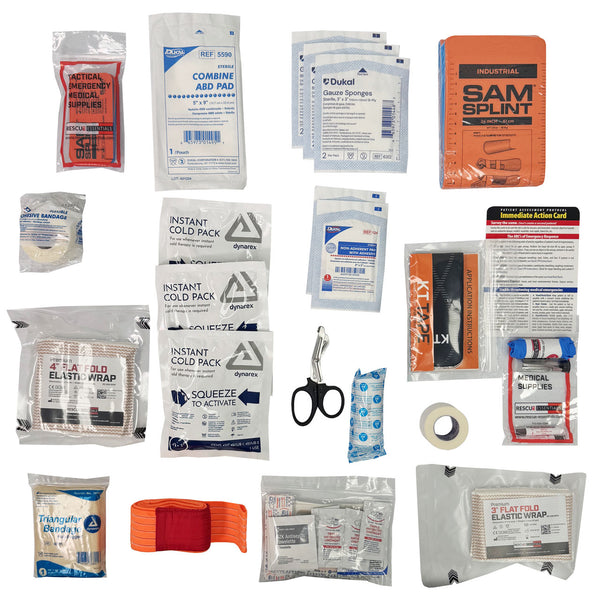
- Disposable gloves: Use them when providing care involving blood or other body fluids.
- Adhesive bandages: Keep several sizes on hand for small cuts and blisters.
- Sterile gauze pads and dressings: Use to cover wounds or apply pressure to bleeding.
- Medical tape and roller bandages: Help secure dressings.
- Antiseptic wipes: For cleaning around minor wounds. Follow product directions and avoid using products in ways not listed on the label.
- Blister care: Include moleskin or blister pads and small bandages.
- Instant cold packs: These can provide temporary relief for minor bumps and strains. Place a cloth between the pack and skin, and follow the package instructions.
- Small scissors and tweezers: Useful for cutting tape or removing visible, superficial debris. Do not probe a wound or remove an embedded object.
- Elastic bandages: Useful for temporary support. They should not be wrapped so tightly that circulation is affected.
- CPR face shield or mask: Helps provide a barrier during rescue breathing.
- Emergency contact information: Keep team contacts, relevant medical information provided by families, and the venue address accessible and protected.
Some teams may also carry a thermometer, a basic first aid guide, sunscreen, insect repellent, and a flashlight. Choose products appropriate for the participants and setting, and follow all label directions. Medication should only be provided under the organization’s policies and with appropriate authorization.
Plan for Serious Emergencies
Supplies alone are not enough. Teams should know how to summon help, who will call 911, who will meet responders, and where the nearest accessible entrance is. For remote practices or events, share the exact location and access instructions with staff in advance.
Organizations should also determine whether an automated external defibrillator (AED) is available nearby and make sure staff know its location. An AED is not a first aid kit item, but access to one can be important during a cardiac emergency. CPR and first aid training can help staff respond while emergency services are on the way.
Recognize Injuries That Need Prompt Attention
Seek urgent medical care for severe bleeding, trouble breathing, loss of consciousness, a suspected broken bone, a serious head or neck injury, or any condition that appears life-threatening. Call 911 when appropriate.
A player with a possible concussion should be removed from play and assessed by a qualified health care professional. Do not allow the athlete to return to the same game or practice unless the organization’s concussion protocol and applicable medical guidance permit it. Symptoms can include headache, dizziness, confusion, nausea, or unusual behavior, and they may not appear immediately.
Heat-related illness can also become an emergency. Confusion, collapse, or a change in consciousness during or after exertion requires immediate emergency attention. Move the person to a cooler area while help is arranged, and follow guidance from emergency personnel or trained medical staff.
Keep the Kit Ready
Assign someone to check the kit before each season and after events. Replace used, damaged, or expired supplies, and make sure items are stored in clean, dry packaging. Keep the kit in a clearly marked, easy-to-reach place—not locked away in a vehicle or equipment room during play.
For tournaments, travel, and outdoor activities, bring the kit to the playing area and ensure someone knows how to find it. Review the venue’s emergency action plan with coaches, staff, and volunteers, and update the plan when locations or team procedures change.
Choose a Kit That Fits Your Team
A small youth team playing close to a school may need different supplies and arrangements than a large tournament held outdoors. Start with a reliable basic kit, then tailor it to the sport, participant needs, venue, and advice of a qualified medical professional. Regular checks, staff training, and a clear emergency plan are just as important as the supplies themselves.
Essential FAQs About Sports First Aid Kits: Contents, Free Kits, and Key Differences
- What is the first aid for sports?
- Can you get free first aid kits?
- What is the difference between ifak and afak?
- What should be in an athletic first aid kit?
- What are 10 important items in a first aid kit?
- What is basic sports first aid?
What is the first aid for sports?
First aid for sports means providing immediate care for an injury or sudden illness during practice or competition. Stop play, check that the area is safe, and assess the person without putting them at further risk. For minor cuts and scrapes, use gloves, clean the wound, and cover it with a sterile dressing; for a minor sprain or bump, rest the injured area and use a wrapped cold pack for short periods. Get medical help for severe pain, suspected fractures, heavy bleeding, breathing problems, or possible head, neck, or spinal injuries. Call 911 for a life-threatening emergency, and don’t let an injured athlete return to play until it is safe to do so.
Can you get free first aid kits?
Free first aid kits may be available through community health programs, schools, sports leagues, workplace safety initiatives, or local emergency-preparedness events, but availability varies by location and organization. Some groups provide kits at no cost, while others offer discounts or require teams to meet certain eligibility guidelines. Contact your league, school, local health department, or community organizations to ask about current programs. Before using a donated kit, check that its contents are appropriate for your sport and that supplies are intact and not expired.
What is the difference between ifak and afak?
An IFAK, or Individual First Aid Kit, is designed for one person to use on themselves or for someone nearby to use on them, often in high-risk or tactical settings. An AFAK, or Advanced First Aid Kit, is generally a larger, more comprehensive kit intended to support care for multiple people or a wider range of injuries. The terms aren’t standardized, so contents vary by manufacturer and organization. For sports, choose a kit based on the activity, number of participants, and available training, and make sure it complements—not replaces—an emergency action plan and access to professional medical care.
What should be in an athletic first aid kit?
An athletic first aid kit should include disposable gloves, adhesive bandages, sterile gauze and dressings, medical tape, antiseptic wipes, blister pads, elastic bandages, instant cold packs, scissors, tweezers, and a CPR face shield. Teams may also want sunscreen, insect repellent, a flashlight, and emergency contact information, depending on the sport and location. Check the kit regularly, replace used or expired supplies, and make sure coaches know where it is and how to get emergency help.
What are 10 important items in a first aid kit?
Ten important items in a sports first aid kit are disposable gloves, adhesive bandages, sterile gauze pads, medical tape, antiseptic wipes, an elastic bandage, blister pads or moleskin, an instant cold pack, tweezers, and small scissors. Together, these supplies can help with common minor injuries such as cuts, scrapes, blisters, and sprains. Check the kit regularly, replace used or expired items, and remember that serious injuries require prompt medical attention.
What is basic sports first aid?
Basic sports first aid is the immediate care given for an injury or illness during practice or competition until the person can return safely or receive professional medical help. It may include checking the scene, getting consent, using gloves, cleaning and covering a minor cut, applying a wrapped cold pack to a minor bump, or supporting a sprain without restricting circulation. Stop play and seek medical care for serious pain, heavy bleeding, suspected fractures, or possible head, neck, or heat-related emergencies. When in doubt, don’t return the athlete to play; follow your team’s emergency plan and call 911 for life-threatening situations.