IFAK: What an Individual First Aid Kit Is and How to Choose One
An individual first aid kit, commonly called an IFAK, is a compact kit designed to help one person provide immediate care for serious injuries—especially life-threatening bleeding—until professional medical help arrives. IFAKs are often associated with military and emergency-response settings, but civilians may also carry one for activities such as hiking, hunting, roadside travel, or work in higher-risk environments.
An IFAK is not a replacement for a full home or vehicle first aid kit, professional medical care, or proper training. Its contents and use should match the user’s needs, activities, and level of training.
What an IFAK Is Designed For
Most IFAKs focus on a small number of urgent trauma-care needs, particularly controlling severe bleeding. Some kits also include supplies for chest injuries or other emergencies. Because kits vary, there is no single standard list of contents. A well-chosen kit should be easy to access, clearly organized, and stocked with items the carrier knows how to use.
Common IFAK Contents
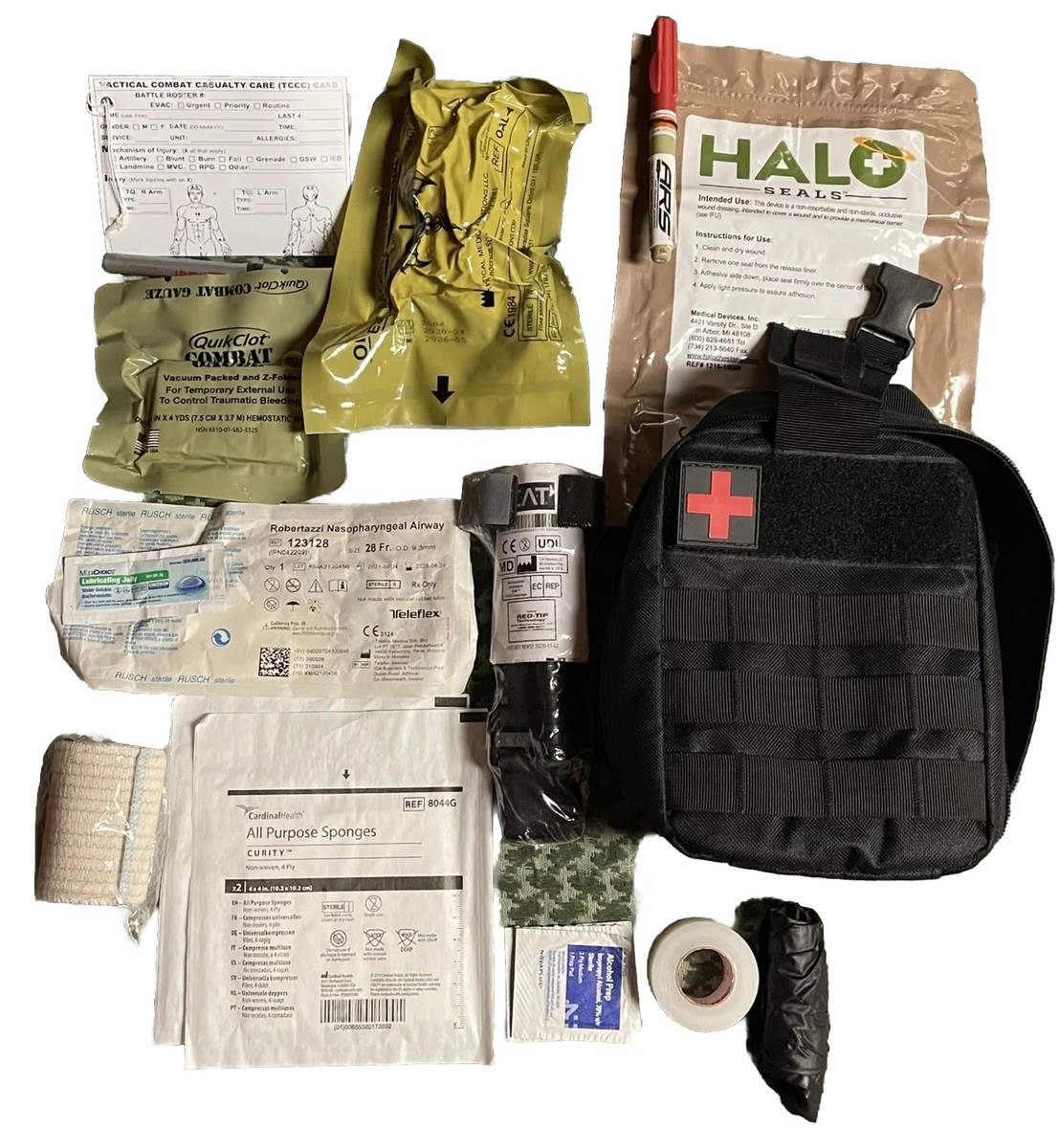
Depending on the kit and its intended use, common items may include:
- Commercial tourniquet: Used to control life-threatening bleeding from an arm or leg. Choose a reputable, tested product and learn its proper use from a qualified instructor.
- Hemostatic gauze: Gauze treated to help control bleeding when used with firm, sustained pressure. Follow the product instructions and any training received.
- Compressed or plain gauze: Used to pack certain wounds or apply pressure, when appropriate and within the user’s training.
- Pressure dressing: Helps maintain pressure over a wound after bleeding has been controlled.
- Medical gloves: Help reduce contact with blood and other bodily fluids. Gloves do not eliminate all risk, so use care and wash or sanitize hands afterward.
- Trauma shears: Can help cut clothing to expose an injury without using a knife.
- Chest seal: May be included for certain penetrating chest injuries. Use only if trained, and follow the product directions and current first-aid guidance.
- Marker: Can be used to record information such as the time a tourniquet was applied for responders.
Some kits include additional supplies, while others are intentionally minimal. Airway devices and other advanced equipment should only be carried and used by people who have received appropriate training.
How to Choose an IFAK
Start with Your Activities
Consider where the kit will be used, how quickly emergency services can reach you, and what hazards are likely. A kit for a vehicle, workplace, or remote outdoor trip may need different supplies and storage than one carried on a belt or in a backpack.
Prioritize Quality and Accessibility
Look for clearly identified, reputable medical products with intact packaging and current expiration dates where applicable. The kit should be secure but quick to open, and its contents should be arranged so they can be found under stress. Avoid adding equipment simply because it looks comprehensive; unfamiliar supplies may be difficult to use effectively.
Get Training Before You Need It
Hands-on instruction can help people recognize life-threatening bleeding and practice using the supplies in their kit. In the United States, the American College of Surgeons’ Stop the Bleed program offers public education on bleeding control. First aid and CPR courses from organizations such as the American Red Cross can provide additional useful skills.
Basic Safety Priorities in an Emergency
- Check that the scene is safe. Do not enter an area with ongoing danger.
- Call 911 or ask someone nearby to call, especially for severe bleeding, serious injury, or altered consciousness.
- Use gloves when available and avoid direct contact with blood.
- Follow your training and the product instructions. For life-threatening limb bleeding, use a tourniquet only as directed by your training and the device instructions. Do not loosen or remove it yourself; tell emergency responders when it was applied.
- Stay with the injured person if it is safe, monitor their condition, and provide information to responders when they arrive.
Do not delay calling for emergency help to search for supplies or perform care beyond your training. An IFAK is meant to support immediate response, not replace professional treatment.
Inspect and Maintain Your Kit
Check an IFAK regularly. Replace used, damaged, wet, or expired items, and make sure seals remain intact. Store the kit where it can be reached quickly, while protecting it from excessive heat, moisture, and other conditions that could damage its contents. Review what is inside so you can locate each item without hesitation.
An IFAK Works Best With Training
A thoughtfully stocked IFAK can help a trained person respond to a serious injury while waiting for emergency services. The most important steps are choosing reliable supplies, keeping them accessible, learning how to use them, and calling for professional help promptly. For personal medical concerns or questions about a particular injury, consult a qualified healthcare professional.
6 Key Benefits of an IFAK (Individual First Aid Kit)
- Helps control severe bleeding quickly.
- Compact and easy to carry.
- Keeps essential trauma supplies together.
- Supports faster response while help is on the way.
- Useful for travel, work, and outdoor activities.
- Encourages preparedness when paired with training.
IFAK Drawbacks: Cost, Training Requirements, and Limited Supplies
- An IFAK may be costly to buy and restock.
- Without training, supplies can be difficult to use correctly.
- Small kits may not contain everything needed for an emergency.
Helps control severe bleeding quickly.
An important advantage of an individual first aid kit (IFAK) is that it can help a trained person respond quickly to severe bleeding. Having supplies such as a tourniquet, gauze, and a pressure dressing close at hand may allow immediate care while emergency services are on the way. Quick action can be critical in a serious injury, so it’s important to keep the kit accessible and learn how to use its contents safely.
Compact and easy to carry.
An IFAK’s compact design makes it easy to carry in a backpack, vehicle, work bag, or dedicated pouch without taking up much space. Keeping essential first-aid supplies within reach can make them easier to access during an emergency, whether you’re at home, on the job, or outdoors.
Keeps essential trauma supplies together.
An IFAK keeps essential trauma supplies together in one organized, easy-to-access kit. In an emergency, having items such as gloves, gauze, and a tourniquet in a known location can reduce time spent searching for supplies and help a trained responder act more quickly.
Supports faster response while help is on the way.
An IFAK keeps essential first-aid supplies close at hand, helping a trained person respond to an injury sooner while emergency services are on the way. Quick access to items such as gauze, a pressure dressing, or a tourniquet can help address severe bleeding without delay. An IFAK does not replace professional medical care, but having the right supplies readily available can support a faster initial response.
Useful for travel, work, and outdoor activities.
An individual first aid kit (IFAK) is useful for travel, work, and outdoor activities because it keeps essential emergency supplies close at hand when injuries happen away from home. A compact kit can be carried in a vehicle, backpack, or work bag, helping you respond to urgent situations while waiting for professional medical care. Choose supplies that suit your activities, and learn how to use them before an emergency.
Encourages preparedness when paired with training.
An IFAK can encourage preparedness by prompting people to think ahead about emergencies and keep essential supplies close at hand. When paired with hands-on training, it also helps users become familiar with their equipment and practice responding to injuries. This combination of preparation and practical skills can support a faster, more confident response while professional help is on the way.
An IFAK may be costly to buy and restock.
An IFAK can be costly to purchase and maintain. Reliable medical supplies may have a higher upfront price, and used, damaged, or expired items need to be replaced to keep the kit ready. Over time, restocking can add up, especially for people who carry multiple kits or choose specialized equipment.
Without training, supplies can be difficult to use correctly.
Without proper training, an IFAK’s supplies can be difficult to identify and use correctly, especially in a stressful emergency. Misusing items such as a tourniquet, hemostatic gauze, or chest seal may delay care or worsen an injury. Hands-on first aid training helps users understand what each item is for and when to call emergency services.
Small kits may not contain everything needed for an emergency.
One drawback of an individual first aid kit (IFAK) is its limited space: a compact kit may not contain every supply needed for a particular emergency. It is typically intended for immediate, focused care—not to handle every injury or replace a larger first aid kit or professional medical treatment. Before choosing an IFAK, consider where and how it will be used, and make sure its contents match your needs and training.