Bulk First Aid Kits: How to Choose and Manage Supplies for a Group
When an emergency happens, having first aid supplies close at hand can help people respond while they wait for professional care. Buying bulk first aid kits can be a practical way for businesses, schools, community organizations, event planners, and households to equip multiple locations or prepare for larger groups.
The right approach depends on who the kits are for, where they will be kept, and what kinds of hazards are likely. A bulk purchase is most useful when the kits are appropriate for their setting, easy to access, and checked regularly.
What Does “Bulk First Aid Kits” Mean?
Bulk first aid kits are kits purchased in larger quantities or as larger-capacity kits for groups. For example, an organization might buy individual kits for several vehicles, classrooms, work areas, or event stations. Another option is a larger kit intended to serve a shared space.
These options are not interchangeable. Multiple smaller kits can be easier to distribute across a site, while a central kit may be easier to inventory. Consider how quickly someone could reach supplies in the places where they may be needed.
Start With Your Needs
Before ordering, make a simple assessment of your setting:
- Estimate the number of people: Consider typical occupancy, not just the number of employees or members on a roster.
- Review the environment: A kitchen, workshop, school, vehicle, outdoor event, and office may have different hazards.
- Consider distance and access: A large building or outdoor site may need kits in several locations.
- Plan for disruptions: Power outages, severe weather, or road closures can affect access to help and resupply.
- Check applicable requirements: Workplace first aid needs can depend on the work, hazards, and access to medical care. Consult relevant regulations and qualified safety professionals.
A first aid kit is not a substitute for emergency services, trained responders, or a site-specific safety plan. In a serious or life-threatening emergency, contact emergency services as soon as possible.
What to Look for in a Kit
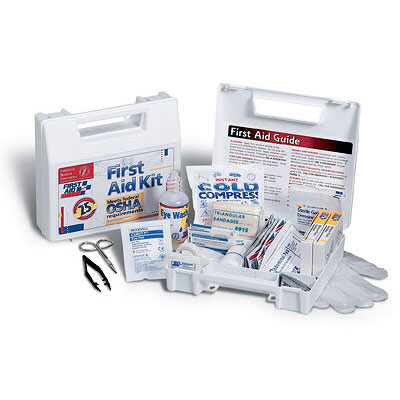
Many general-purpose kits include basic supplies for minor injuries, such as adhesive bandages, gauze dressings, medical tape, antiseptic wipes, gloves, and scissors. The exact contents and quantities vary, so compare the itemized list rather than relying only on the kit’s label or advertised capacity.
When comparing bulk first aid kits, look for:
- Clear contents lists: Make sure you know what is included and how many of each item you will receive.
- Suitable containers: Cases should be durable enough for their intended location and easy to identify.
- Organized compartments: Clearly arranged supplies are easier to find under pressure.
- Refill availability: Check whether commonly used items can be replaced without buying an entirely new kit.
- Expiration information: Some products have expiration dates or storage requirements.
- Accessible instructions: Basic guidance can be helpful, but it does not replace first aid training.
Specialized items, such as burn dressings or supplies for severe bleeding, should be selected according to the hazards and the training available to the people who may use them. Avoid including medications or other products without considering allergies, policies, storage needs, and who is permitted to administer them.
Individual Kits or Shared Kits?
Individual kits can work well for vehicles, field teams, classrooms, or staff who move between locations. Shared kits may suit reception areas, break rooms, community centers, or event checkpoints. Some organizations use both: smaller kits near work areas and a larger, more comprehensive kit in a central location.
Whichever arrangement you choose, make sure kits are visible, labeled, and not blocked by furniture or stored behind locked doors that responders cannot access. A location map can help staff and visitors find them quickly.
Bulk Buying and Budgeting
Buying in quantity may simplify purchasing, but the lowest price per kit is not always the best value. Compare the cost of the initial order with the cost of refills, replacement cases, and staff time needed to inspect supplies. Also consider whether the contents match your actual needs; a kit filled with unsuitable or unnecessary items may not be a good investment.
Before placing a large order, consider purchasing a sample kit or reviewing one in person. Confirm delivery timelines, return policies, refill options, and how the supplier handles products with limited shelf lives.
Storage and Maintenance
First aid supplies need routine attention. Assign a person or team to inspect each kit on a regular schedule and after it has been used. Replace opened, damaged, contaminated, or expired items, and keep a record of inspections and restocking.
Store kits in a clean, dry, accessible location, following the manufacturer’s instructions. Heat, moisture, and direct sunlight can damage some supplies. For organizations with multiple kits, a simple inventory sheet or tracking system can help identify shortages before an emergency.
Prepare People, Not Just Kits
Supplies are only one part of preparedness. Make sure people know where kits are located, how to contact emergency services, and how to report an incident. First aid, CPR, or other relevant training can help responders use supplies safely and recognize when professional care is needed.
For workplaces, schools, events, and community facilities, bulk first aid kits can make preparedness more consistent across a site. Choose kits based on the people and hazards involved, place them where they can be reached, and keep them stocked. A thoughtful plan helps ensure that supplies are ready when they are needed.
7 Tips for Choosing, Storing, and Maintaining Bulk First Aid Kits
- Choose kits sized for your group and setting.
- Check that supplies meet applicable workplace requirements.
- Compare contents before buying in bulk.
- Store kits in cool, dry, easy-to-reach places.
- Label each kit and post its location.
- Inspect supplies regularly and replace expired items.
- Train staff on basic first aid and emergency procedures.
Choose kits sized for your group and setting.
Choose first aid kits sized for the number of people they need to serve and the setting where they’ll be used. A small office, a busy school, a worksite, and an outdoor event can have different needs, hazards, and distances between people and supplies. Consider keeping several smaller kits in easy-to-reach locations rather than relying on one large kit, and check the contents list to make sure it includes appropriate supplies for your group.
Check that supplies meet applicable workplace requirements.
Before buying bulk first aid kits, check that their contents meet the workplace requirements that apply to your business and industry. Needs may vary based on workplace hazards, the number of employees, and how quickly professional medical care is available. Review current regulations and consult a qualified safety professional when needed, then choose kits that fit your workplace and keep them stocked and accessible.
Compare contents before buying in bulk.
Before buying first aid kits in bulk, compare each kit’s itemized contents rather than relying on labels such as “large” or “for 100 people.” Check the types and quantities of supplies, expiration dates, storage requirements, and whether the contents suit your setting’s likely hazards. Also consider refill availability and the cost of replacing commonly used items. Comparing these details helps you choose kits that are useful for your group and avoid paying for supplies you don’t need.
Store kits in cool, dry, easy-to-reach places.
Store bulk first aid kits in cool, dry locations to help protect supplies from heat and moisture, which can damage packaging or affect product quality. Keep kits easy to see and reach, and avoid placing them behind locked doors, heavy equipment, or clutter. In larger buildings or event spaces, distribute kits across key areas and clearly mark their locations so people can find supplies quickly when needed.
Label each kit and post its location.
Label each bulk first aid kit clearly and post its location where people can easily see it, such as on a wall map, staff notice board, or emergency plan. Use consistent labels across your facility so employees, visitors, and responders can find supplies quickly during an emergency. Keep location information current whenever a kit is moved, and make sure kits remain visible and easy to access.
Inspect supplies regularly and replace expired items.
Inspect bulk first aid kits regularly to make sure supplies are clean, complete, and ready to use. Check expiration dates, especially on items such as antiseptic products and medications, and replace anything expired, damaged, or used. Keeping a simple inspection schedule and restocking promptly helps ensure every kit is dependable in an emergency.
Train staff on basic first aid and emergency procedures.
Training staff in basic first aid and emergency procedures helps ensure bulk first aid kits can be used safely and effectively when an incident occurs. Teach employees where kits are located, how to contact emergency services, and how to respond to common injuries while avoiding actions beyond their training. Schedule refresher sessions and make sure new staff know the organization’s procedures.