First Aid Kit Metal Box: What to Know Before You Choose One
A first aid kit metal box can keep medical supplies together in one sturdy, easy-to-find place. Metal cases are often used in workshops, garages, offices, schools, vehicles, and homes. Before choosing one, consider where it will be stored, what supplies it needs to hold, and how it will be protected from moisture and damage.
Why Choose a Metal First Aid Box?
Metal boxes are generally more rigid than fabric pouches and may help protect their contents from bumps, dust, and everyday wear. Many have a simple design that makes them suitable for a shelf, cabinet, or wall-mounted location. A solid case can also make supplies easier to organize, especially when it includes compartments or removable trays.
However, a metal box is not automatically waterproof or rustproof. Hinges, seams, and closures can allow moisture inside, and some finishes may corrode over time. A metal case can also be heavier than a plastic or fabric kit, which may make it less convenient to carry during an emergency.
What to Look for in a Metal First Aid Kit Box
- Size and capacity: Choose a box that fits the supplies needed for the location and the number of people it may serve.
- Secure closure: A dependable latch helps keep the lid closed, while a lock may be useful where children or unauthorized users could access the contents. Make sure responsible adults can still reach the kit quickly.
- Organization: Trays, dividers, or labeled compartments can make it easier to find supplies under pressure.
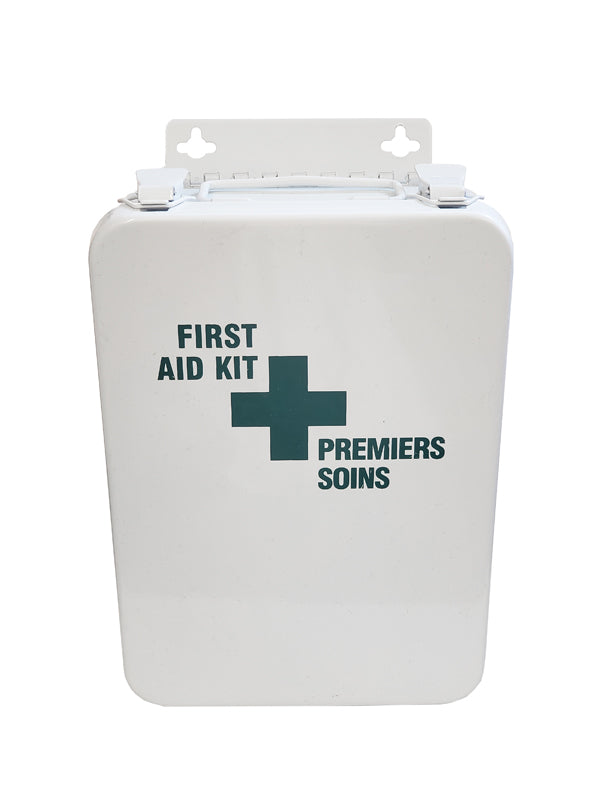
- Visibility: A clear first aid label or recognizable symbol helps people identify the box quickly.
- Mounting options: For workplaces or shared spaces, wall-mounting can keep the kit visible and accessible. Install it where people can reach it without a key or special tool.
- Finish and construction: Look for smooth edges, sturdy hinges, and a finish appropriate for the environment. If the box will be kept in a damp area, choose a corrosion-resistant model and check the manufacturer’s care instructions.
What Should Go Inside?
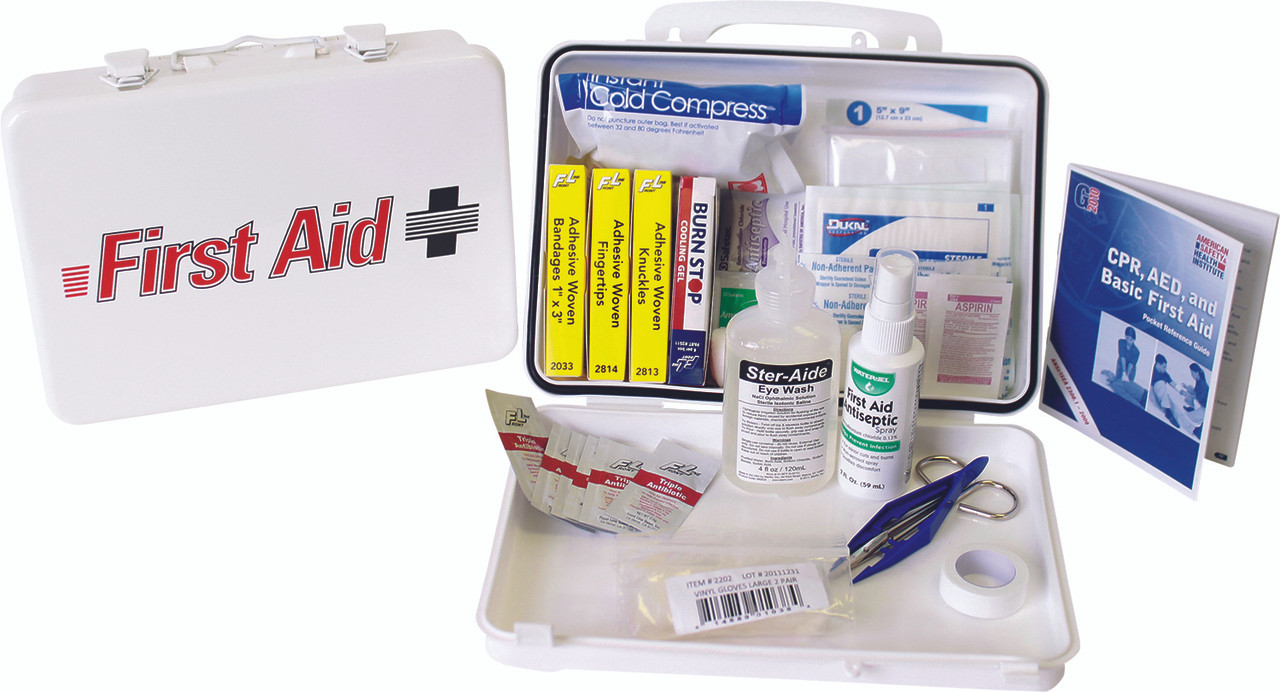
The right contents depend on the setting, the number of people, and any known medical needs. A general-purpose kit may include adhesive bandages in assorted sizes, sterile gauze pads, roller bandages, medical tape, antiseptic wipes, disposable gloves, tweezers, scissors, and a first aid guide. A workplace or vehicle kit may need additional supplies based on its hazards and applicable safety requirements.
Keep medicines and other temperature-sensitive items only if they can be stored according to their labels. Do not add prescription medication for someone else to use. Anyone with personal medical needs should keep their own necessary medication accessible and follow their clinician’s instructions.
Where to Store the Box
Place the kit in a visible, consistently accessible location. Avoid areas exposed to rain, standing water, extreme heat, or heavy humidity. A garage or vehicle may experience wide temperature changes, so inspect supplies stored there more often and follow product storage guidance. If the metal case is not sealed against moisture, consider placing vulnerable supplies in their original packaging or in sealed inner pouches.
In a workplace or shared building, tell people where the kit is and make sure the route to it stays clear. A first aid box is useful only when people can locate and open it promptly.
Inspect and Restock Regularly
Check the box on a regular schedule and after every use. Replace opened, damaged, or missing items, and check expiration dates where applicable. Look inside the case for moisture, rust, loose hinges, or a faulty latch. Clean the box according to its manufacturer’s instructions, and keep an inventory so it is clear what needs replenishing.
Metal Box or Another Type of Case?
A metal box may be a good choice when durability and organized storage are priorities. For hiking, travel, or situations where the kit must be carried quickly, a lightweight, water-resistant bag may be more practical. In damp environments, a properly sealed plastic case may offer better moisture protection. The best option is the one that fits the location, stays in good condition, and can be reached when needed.
Use the Kit Safely
A first aid kit supports basic care but does not replace professional medical treatment. For a life-threatening emergency, call 911. Use only supplies and procedures you are trained to use, and consider taking a recognized first aid and CPR course. A well-stocked, clearly labeled metal first aid box can make essential supplies easier to organize and find—but regular inspection and safe access are just as important as the box itself.
5 Essential Tips for Maintaining Your Metal First Aid Kit
- Label the box clearly as “First Aid.”
- Store it somewhere cool and dry.
- Keep it easy to reach in an emergency.
- Check supplies regularly and replace expired items.
- Smooth sharp edges and watch for rust.
Label the box clearly as “First Aid.”
Label the metal box clearly as “First Aid” so it can be recognized quickly during an emergency. Use large, easy-to-read lettering on the front and, if the box is stored on a shelf or in a cabinet, on a visible side as well. Keep the label unobstructed and make sure the box stays in a familiar, accessible location.
Store it somewhere cool and dry.
Store your first aid kit metal box in a cool, dry place to help protect its contents from heat and moisture. Damp conditions can cause the box to rust and may damage bandages, medications, and other supplies. Keep it somewhere easy to find and reach, but away from direct sunlight, heaters, sinks, and areas prone to leaks or flooding.
Keep it easy to reach in an emergency.
Keep your first aid kit metal box in a clearly marked, easy-to-reach spot so it can be found quickly during an emergency. Store it at a convenient height, keep the path to it clear, and make sure everyone in your home or workplace knows where it is. Avoid locking it away unless authorized people can access it immediately.
Check supplies regularly and replace expired items.
Check the supplies in your first aid kit metal box regularly, and replace any expired, damaged, or used items. Pay special attention to products with expiration dates, such as ointments and sterile supplies, and make sure packaging is sealed and intact. A simple inspection every few months—and after each use—helps ensure the kit is ready when you need it.
Smooth sharp edges and watch for rust.
Choose a first aid kit metal box with smooth, finished edges to help prevent cuts when opening or handling it. Check the box regularly for rust, especially around seams, hinges, and the latch, since corrosion can weaken the case and damage supplies. If you find sharp edges or significant rust, repair or replace the box and move the first aid supplies to a clean, safe container.